English| EUR
Suggested for you
More currencies
Book Now
Open today · 08:00–17:00

Honolulu Whale Watching Cruise

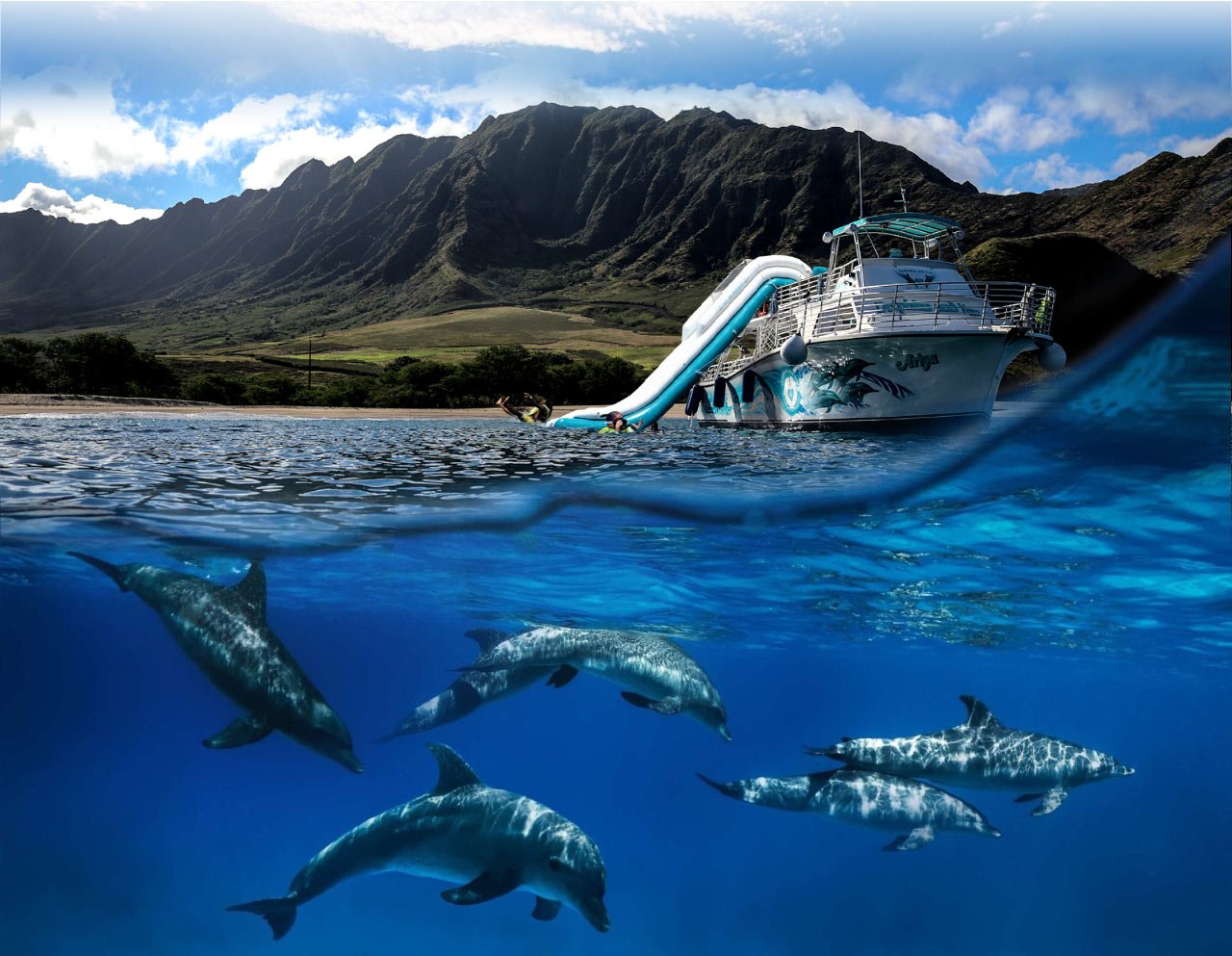
Honolulu Whale Watching Cruise — Humpback Season in Hawaiian Waters

Glass-bottom boats and catamarans glide past breaching giants, December through April migrations transform the coast

50K+ travelers chose this
Free Cancellation
Right now: Moderate — autumn season Morning conditions remain favorable for sightings today.
Free Cancellation
Free cancellation Instant confirmation Mobile voucher Verified partner Expert naturalist guides
11.3K+
Annual Hawaii visitors
Migrating to breed and calf
3K mi
Migration distance
From Alaskan feeding grounds
45–50 ft
Average whale length
Comparable to a school bus
0 USD
Entrance fee
Individual operator charges apply
08:00–16:00
Best arrival window
Optimal lighting for spotting
Choose your ticket

Honolulu Whale Watching Cruise tickets at a glance

Compare fares, pick the fit — all bookings are mobile-voucher and eligible for free cancellation where shown.

Waikiki Humpback Whale Watching Catamaran Cruise 2 hr
Standard Entry

Waikiki Humpback Whale Watching Catamaran Cruise

4.1 (53)
€46
  • Entry ticket
  • Mobile voucher
  • Valid same day
  • Free cancellation
Book this ticket
Waikiki Morning Whale Watching Sail 2 hr
Standard Entry

Waikiki Morning Whale Watching Sail

4.4 (119)
€85
  • Entry ticket
  • Mobile voucher
  • Valid same day
  • Free cancellation
Book this ticket
Compare options

Compare Honolulu Whale Watching Cruise ticket options

Experience DurationRatingGuideFree cancel. Price
Standard Entry
Most popular
Oahu Humpback Whale Watching Cruise
1 hr 30 min★ 4.5 €49 Book →
Standard Entry
Waikiki Humpback Whale Watching Catamaran Cruise
2 hr★ 4.1 €46 Book →
Standard Entry
Waikiki Morning Whale Watching Sail
2 hr★ 4.4 €85 Book →

Is a Honolulu Whale Watching Cruise Worth the Cost?

Worth it during peak whale season

A honolulu whale watching cruise delivers strong value between December and April when humpback whales migrate to Hawaiian waters, with sighting rates above 90% during peak months. Tours range from intimate catamaran sails to glass-bottom boat experiences, typically running 2-3 hours with marine naturalist narration. The Waikiki catamaran options offer smoother rides and better viewing angles than larger vessels, while West Oahu departures access calmer waters with fewer crowds. Educational commentary from certified guides adds context about humpback behavior, migration patterns, and conservation efforts that shore-based viewing cannot match. The cruise experience works best for visitors prioritizing wildlife encounters over beach time, though September departures fall outside migration windows and rarely spot whales. Families with young children benefit from shorter morning sails, while photography enthusiasts gain stability and proximity impossible from land. Budget-conscious travelers should weigh the per-hour cost against the seasonal guarantee of sightings.

What makes it worth it

  • 90%+ whale sighting rates during peak season
  • Expert naturalist narration on marine behavior
  • Catamaran stability beats crowded shore viewing
  • Morning departures offer calmer seas and better light
  • Glass-bottom options add underwater perspective

Keep in mind

  • September falls outside migration season
  • Tours require 2-3 hour commitment
  • Rough seas possible on windward departures
  • No sighting guarantee outside December-April

Bottom line: Book a honolulu whale watching cruise tour between December and April for reliable humpback encounters that justify the investment, but skip outside migration months when sightings drop to near zero.

Head to head

Honolulu Whale Watching Cruise vs. Waikiki Snorkeling Tour — Which Is Better?

They complement each other; most visitors who do both call the whale watching cruise the more thrilling seasonal encounter, while snorkeling is the preferred choice for reliable marine life sightings.

Top pick
Whale Watching Cruise
Snorkeling Tour
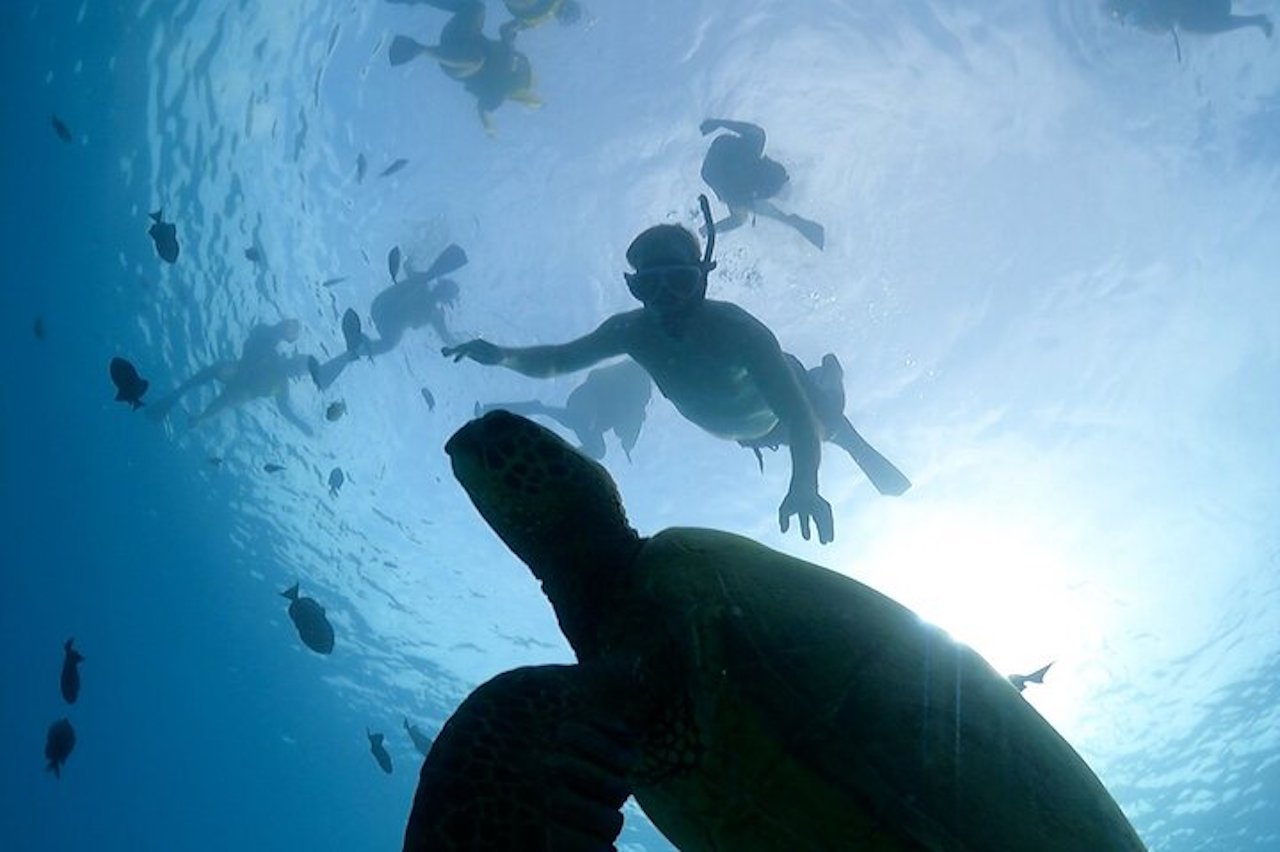
Primary focus Reef exploration and turtles
Departure point Kewalo Basin/Waikiki
Typical duration 2–3 hours
Seasonal availability Year-round
Intensity level Active/In-water
Price range (summer) 99–189 USD
Best for Water-confident marine enthusiasts

Verdict: Choose a honolulu whale watching cruise for a seasonal bucket-list experience, or opt for a snorkeling tour if you prioritize guaranteed animal encounters like sea turtles.

Featured Experiences

Popular Honolulu Whale Watching Cruise tours & activities

Hand-picked experiences loved by thousands of travelers

Recommended Experience

Powered by GetYourGuide

Another traveler favorite

Powered by GetYourGuide
West Oahu Whale Watching Sail 2 hours Free Cancellation

West Oahu Whale Watching Sail

Afternoon sailing adventure to observe humpback whales along Oahu's scenic western shoreline

4.6 (42)
FromFrom €76.63
See details
Waikiki Humpback Whale Watching Glass Bottom Boat Tour 2 hours Free Cancellation

Waikiki Humpback Whale Watching Glass Bottom Boat Tour

Two-hour guided ocean adventure with underwater viewing room and whale sighting guarantee on Oahu

4.1 (31)
FromFrom €49.55
See details
Waikiki Whale Watching Cruise with Hula Performance 2 hours Free Cancellation

Waikiki Whale Watching Cruise with Hula Performance

Observe humpback whales from a luxurious vessel while enjoying Hawaiian refreshments and cultural traditions

4.9 (13)
FromFrom €86.11
See details
Honolulu Humpback Whale Watching Morning Cruise 2 hours Free Cancellation

Honolulu Humpback Whale Watching Morning Cruise

Set sail aboard the Star of Honolulu for a marine wildlife adventure with breakfast and expert guides

FromFrom €73.19
See details
90-Minute Sunset Catamaran Cruise in Honolulu 1.5 hours Free Cancellation

90-Minute Sunset Catamaran Cruise in Honolulu

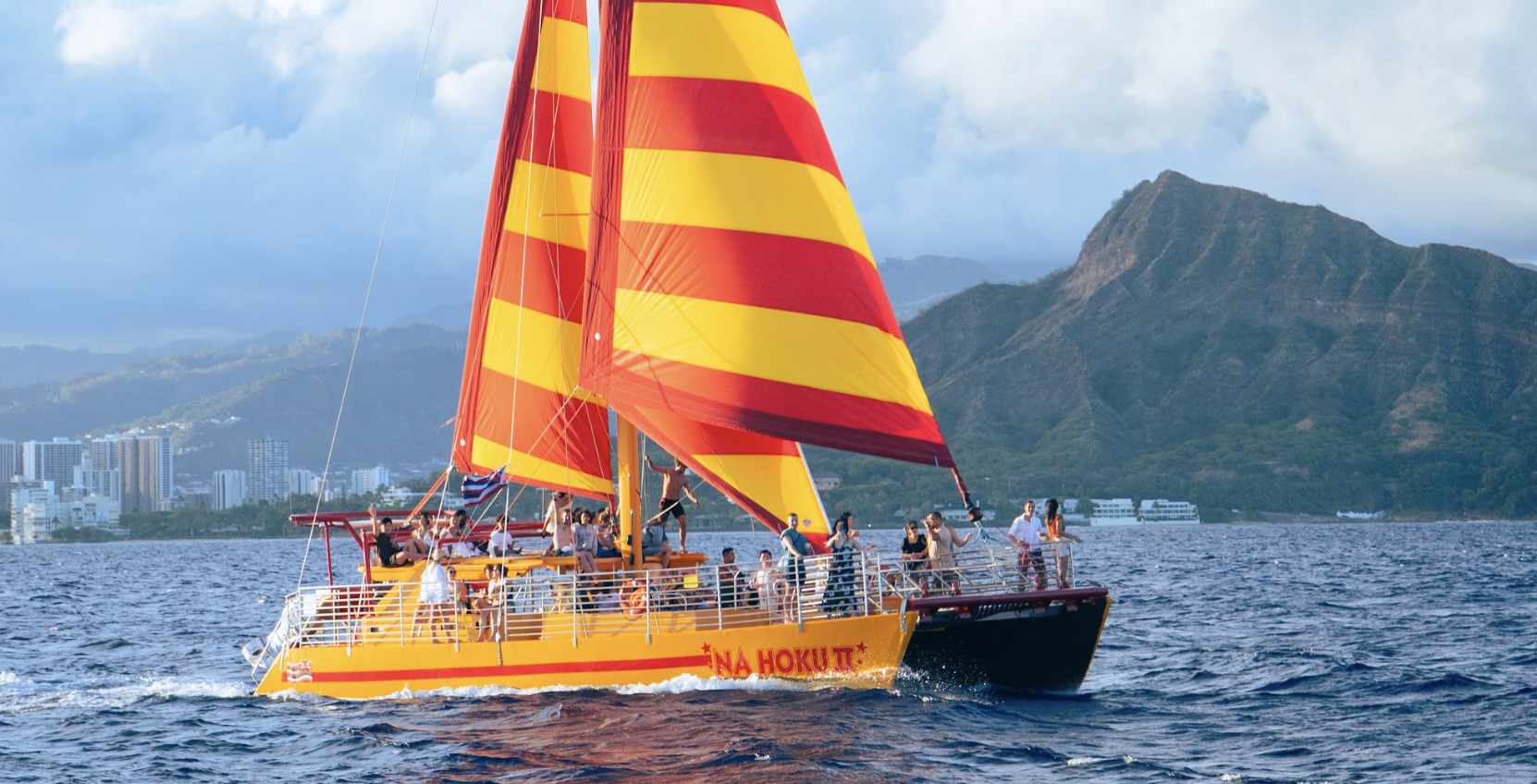
Glide across Hawaiian waters on a vibrant yellow catamaran as the sun dips below the horizon

4.6 (106)
FromFrom €48.53
See details
West Oahu Dolphin Encounter & Snorkel Adventure 3 hours Free Cancellation

West Oahu Dolphin Encounter & Snorkel Adventure

Observe wild spinner dolphins, snorkel vibrant reefs with sea turtles, and enjoy Hawaiian culture on this ocean cruise

4.8 (103)
FromFrom €163.6
See details
Waikiki Turtle Snorkeling Catamaran Cruise 2 hours Free Cancellation

Waikiki Turtle Snorkeling Catamaran Cruise

Sail a pink-sailed catamaran and snorkel with Hawaiian green sea turtles in crystal-clear waters

4.6 (358)
FromFrom €72.95
See details
Honolulu Catamaran Sailing Adventure 2 hours Free Cancellation

Honolulu Catamaran Sailing Adventure

Sail Oahu's stunning coastline while spotting dolphins, turtles, and seasonal whales on this relaxing cruise

FromFrom €121.39
See details
Your journey

Your Honolulu Whale Watching Cruise day, step by step

1
Check-in

Check-in

Confirm honolulu whale watching cruise tickets at the pier

2
Boarding

Boarding

Safety briefing and vessel departure

3
Wildlife Search

Wildlife Search

Active spotting of marine mammals

The experience

What visiting Honolulu Whale Watching Cruise is really like

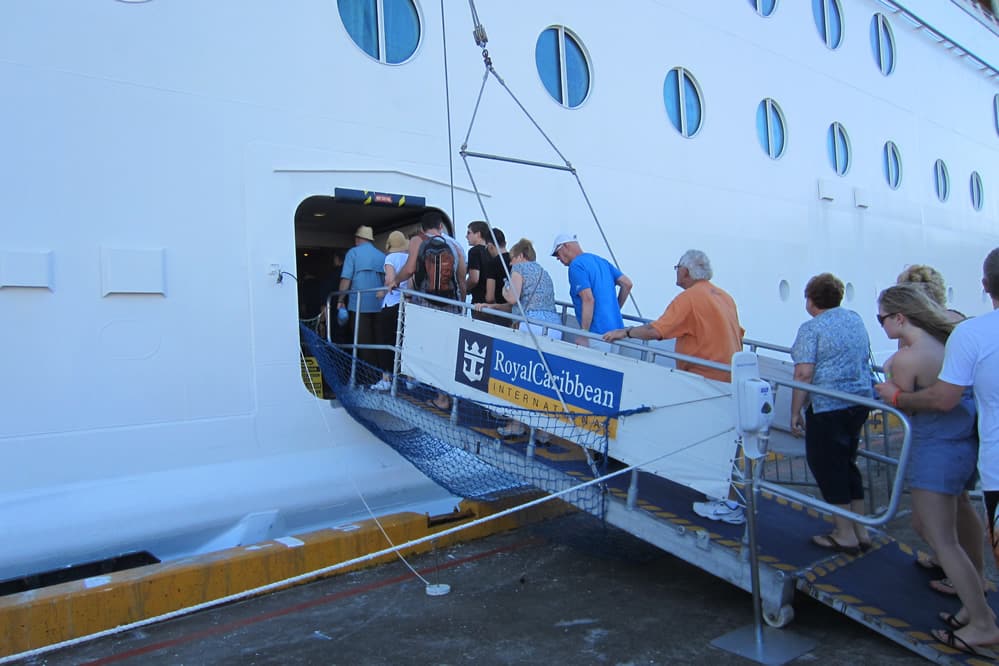
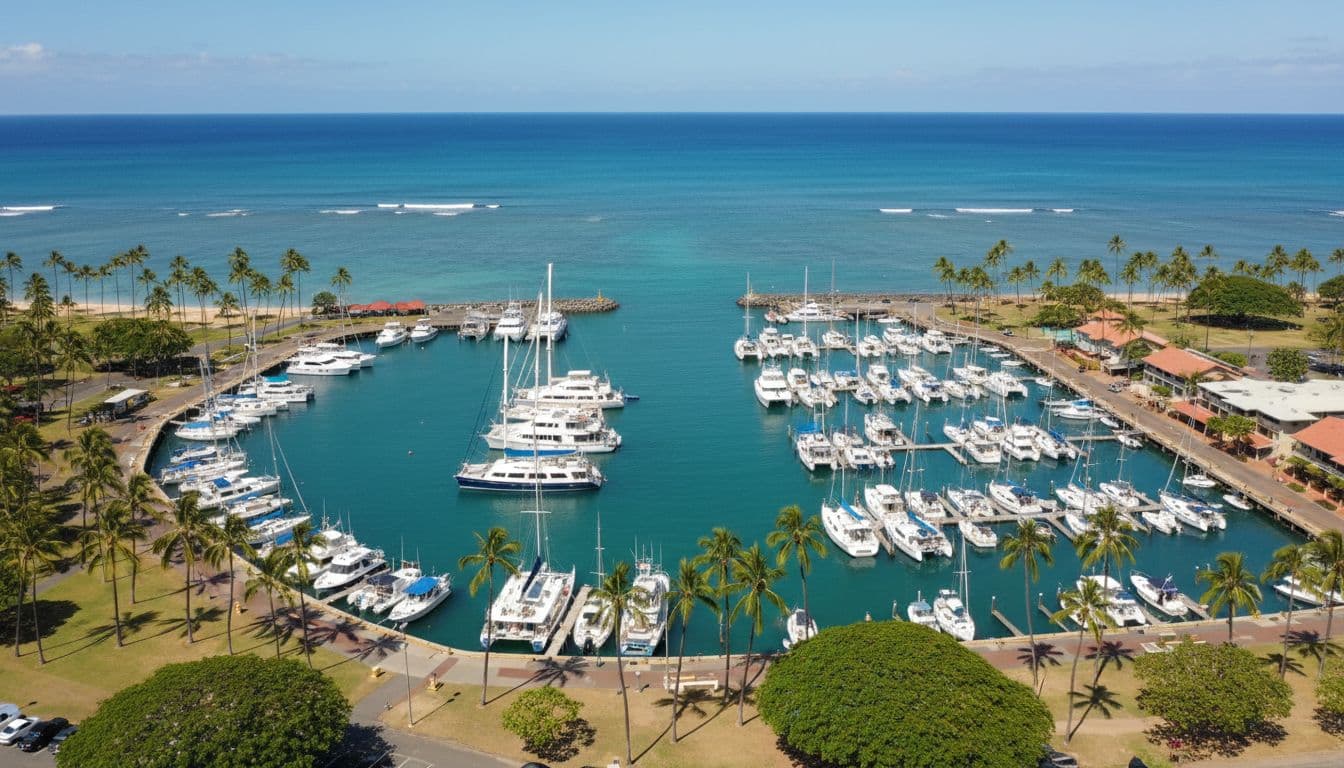
You board at Kewalo Basin Harbor or Waikiki Beach between 8:00 and 9:00 AM, stepping onto a catamaran or glass-bottom vessel as crew members distribute polarized sunglasses to reduce glare.

Read more Show less

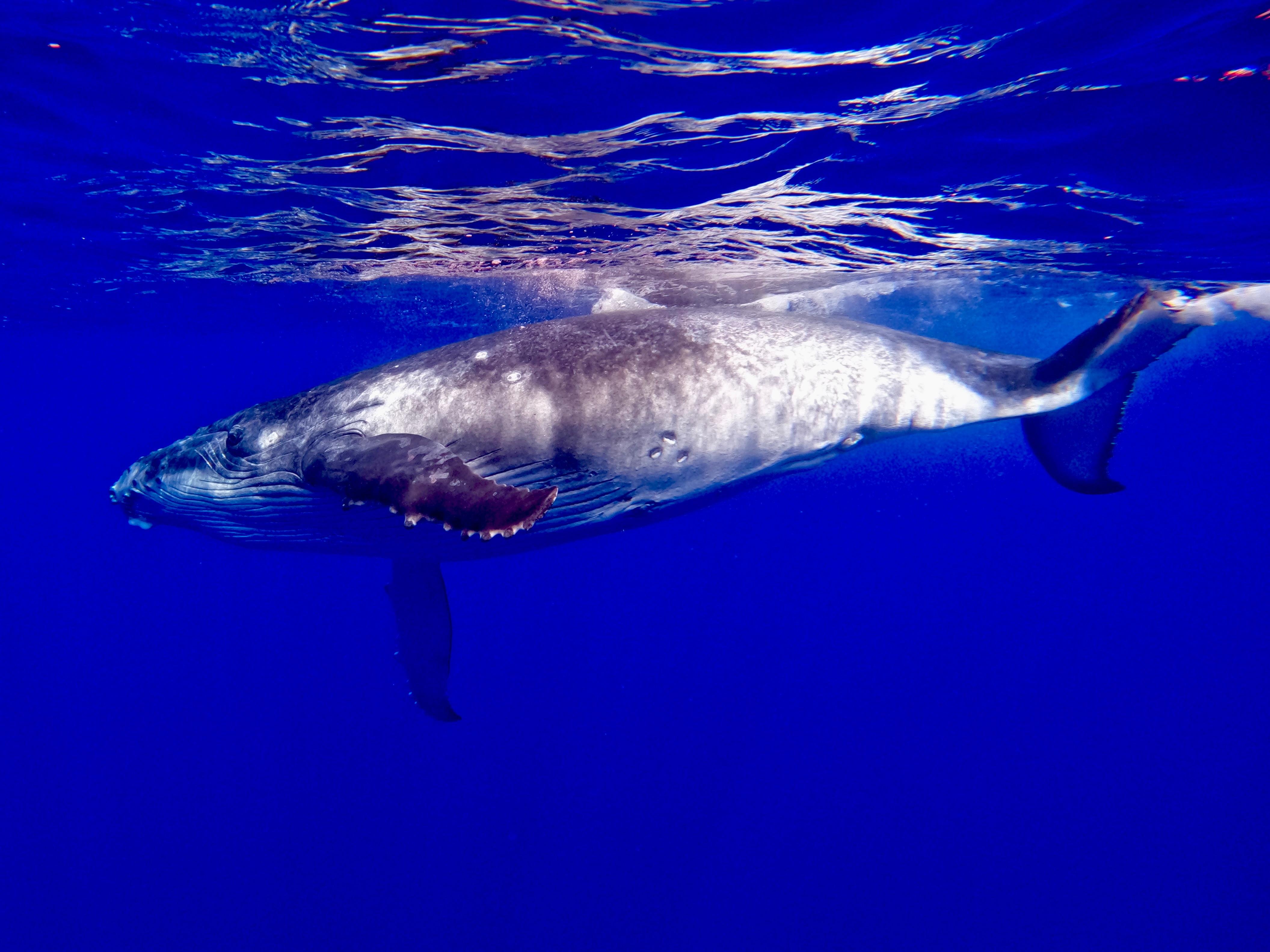
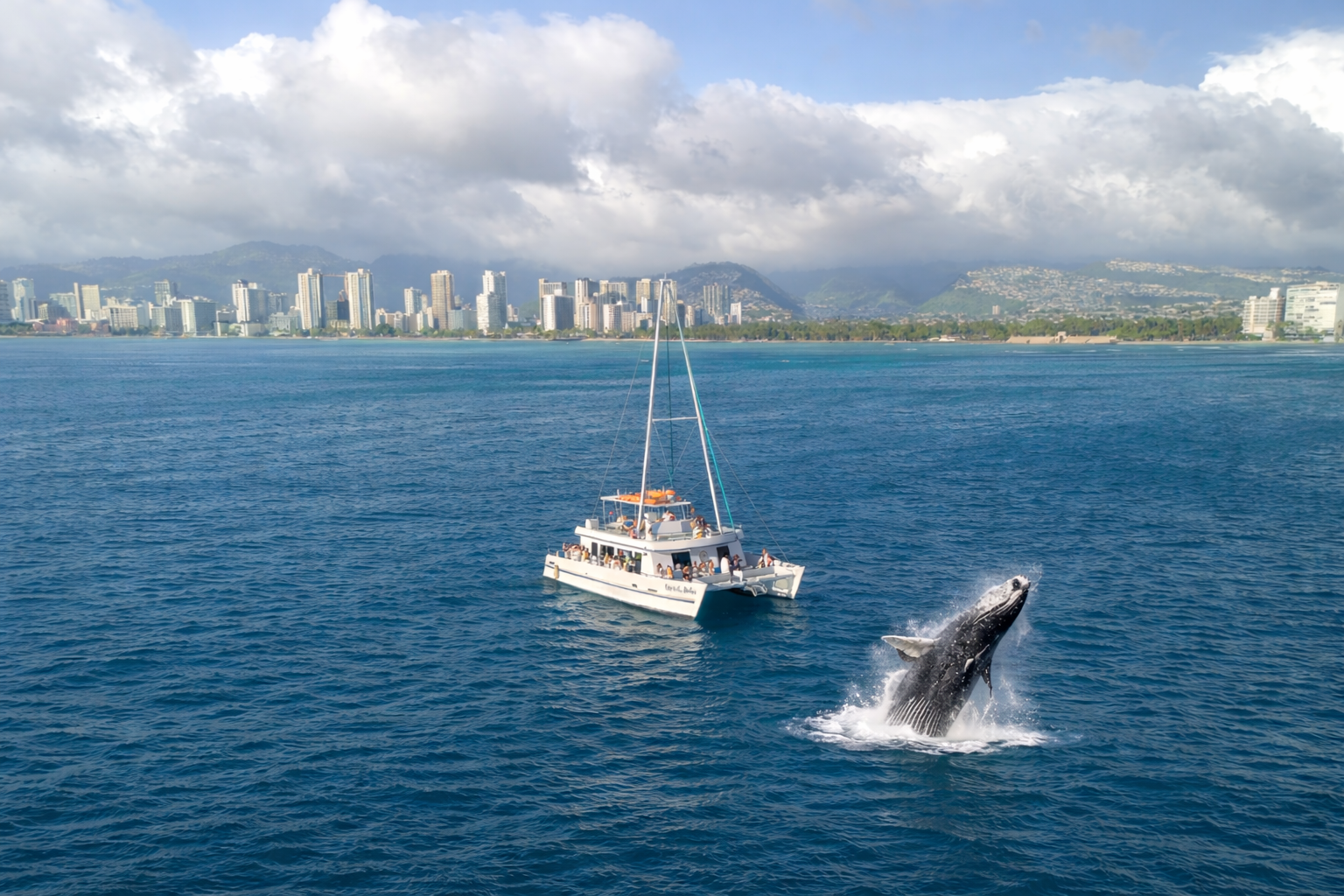
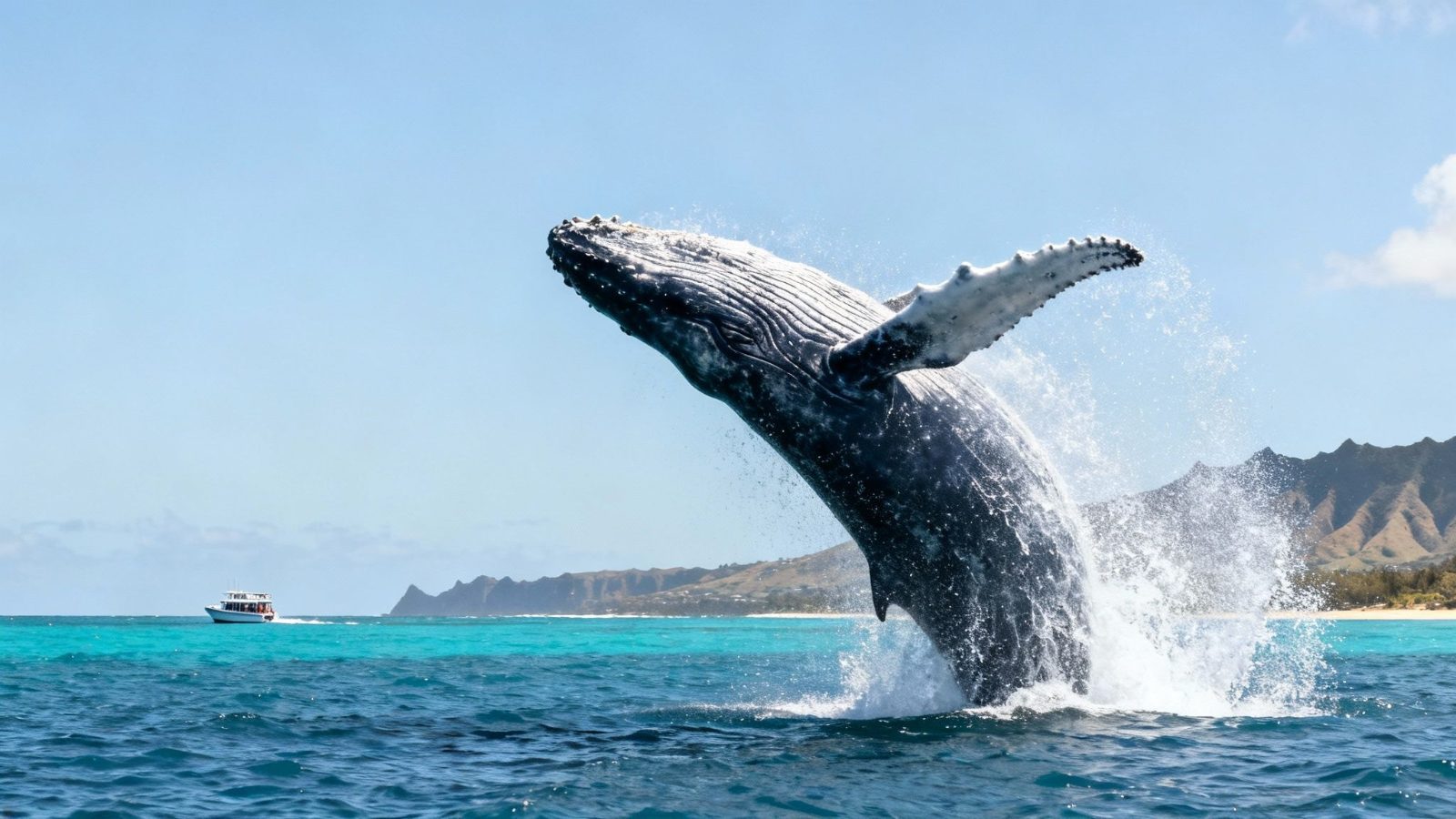
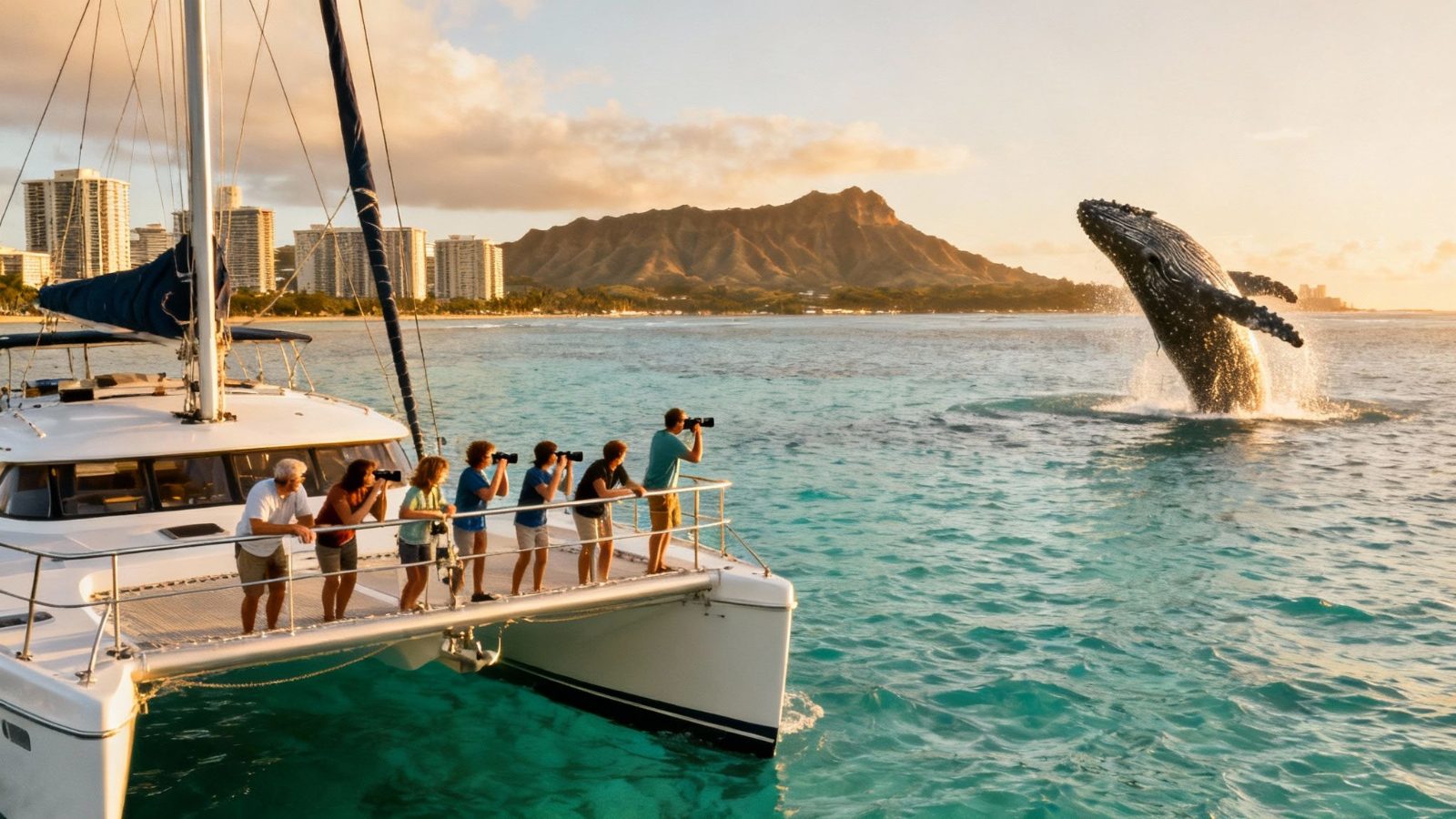
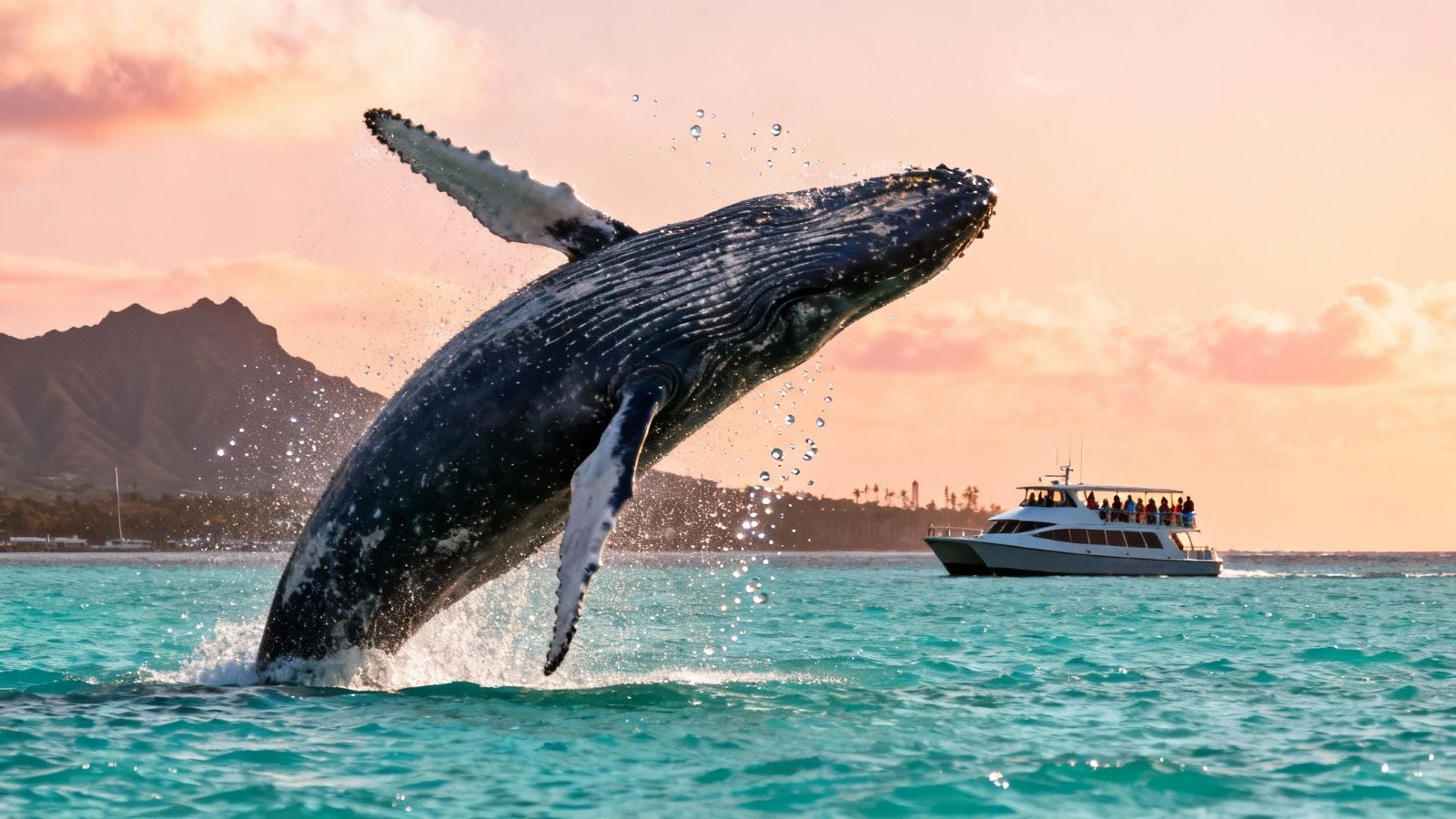
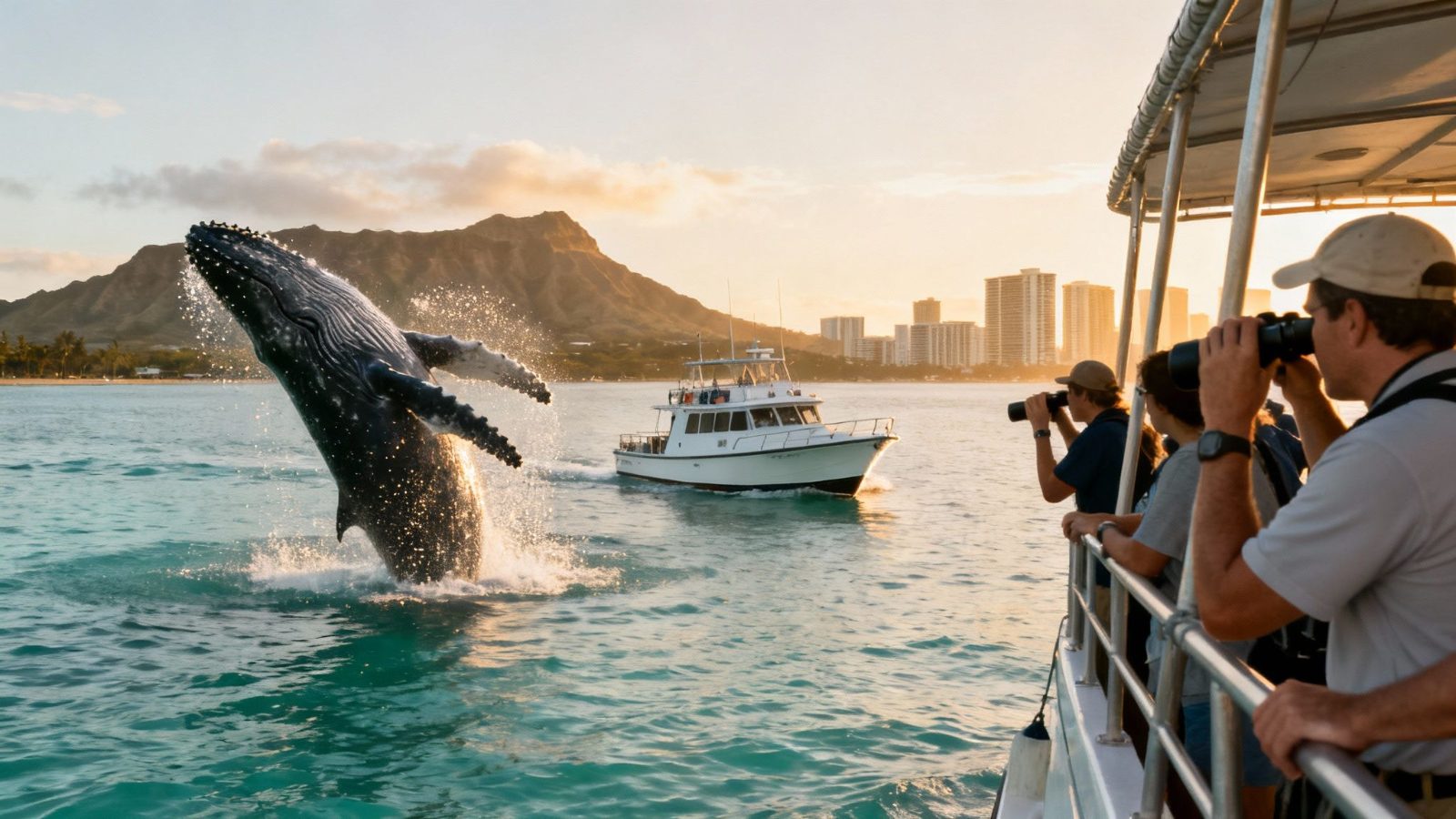
The boat clears the harbor breakwater and follows the southern coastline, Diamond Head rising to the east as the captain scans for whale spouts on the horizon. Within fifteen minutes, a naturalist points to a plume of mist 400 yards ahead — a humpback surfacing to breathe before diving, its tail flukes lifting vertically as it descends.

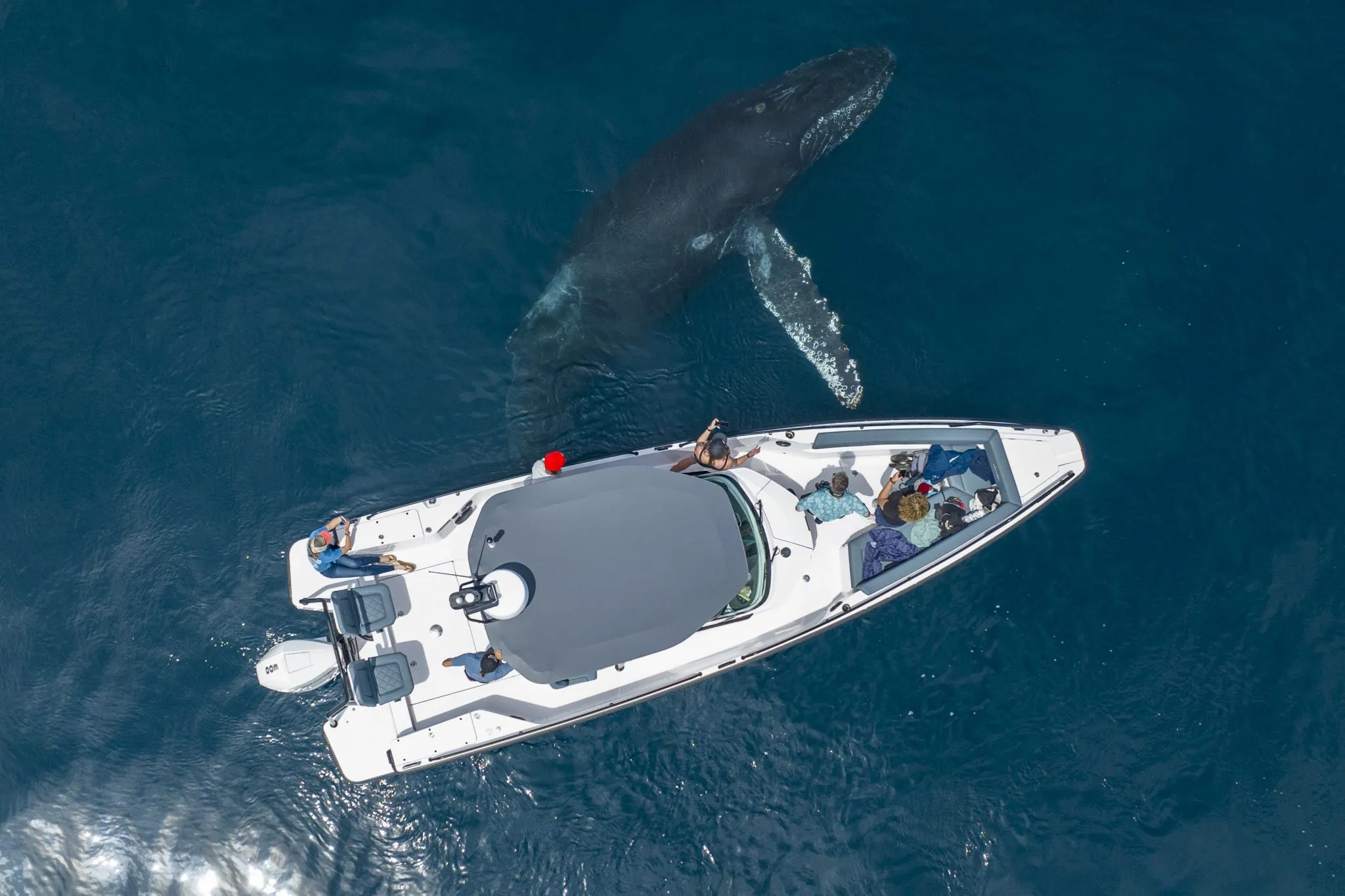
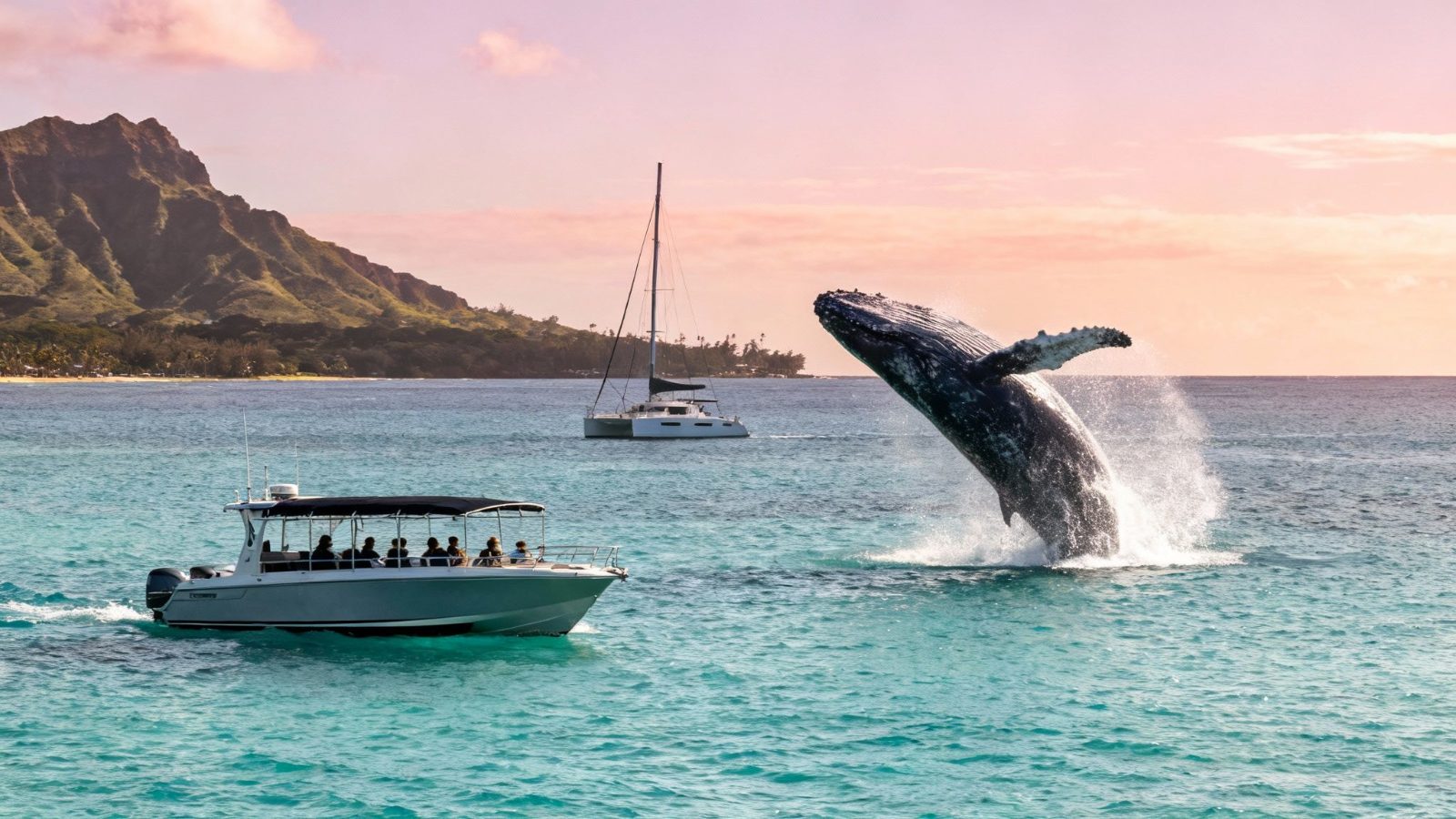
You move to the bow as the vessel slows to idle speed, maintaining the sanctuary's 100-yard buffer while a second whale surfaces closer, its barnacle-encrusted head breaking the waterline. The naturalist identifies it as a juvenile male based on size and solitary behavior, explaining the scarring pattern along its dorsal fin from encounters with fishing gear. A hydrophone speaker broadcasts low-frequency pulses — a singing male performing somewhere below — as passengers line the rails with cameras. The boat repositions twice over the next hour, tracking a competitive pod of three males chasing a female, their synchronized breaches sending spray across the deck. You return to harbor by mid-morning, salt-crusted and logged in the sanctuary's daily sighting report.

Honolulu Whale Watching Cruise
Everything You Need to Know

Your complete Honolulu Whale Watching Cruise guide

All the details about your upcoming adventure in one place

Every winter, humpback whales travel over 3,000 miles from Alaskan feeding grounds to the warm shallow waters surrounding the Hawaiian Islands, arriving in mid-December and remaining through late April.

The Hawaiian Islands Humpback Whale National Marine Sanctuary protects 1,400 square miles of ocean habitat around Oahu, Maui, and the Big Island, designating these waters as critical breeding and calving grounds for North Pacific humpbacks. By the 1960s, commercial whaling had reduced the population to fewer than 1,400 individuals; today, more than 12,000 humpbacks return to Hawaiian waters each season, a recovery documented by NOAA researchers stationed at Kewalo Basin Harbor.

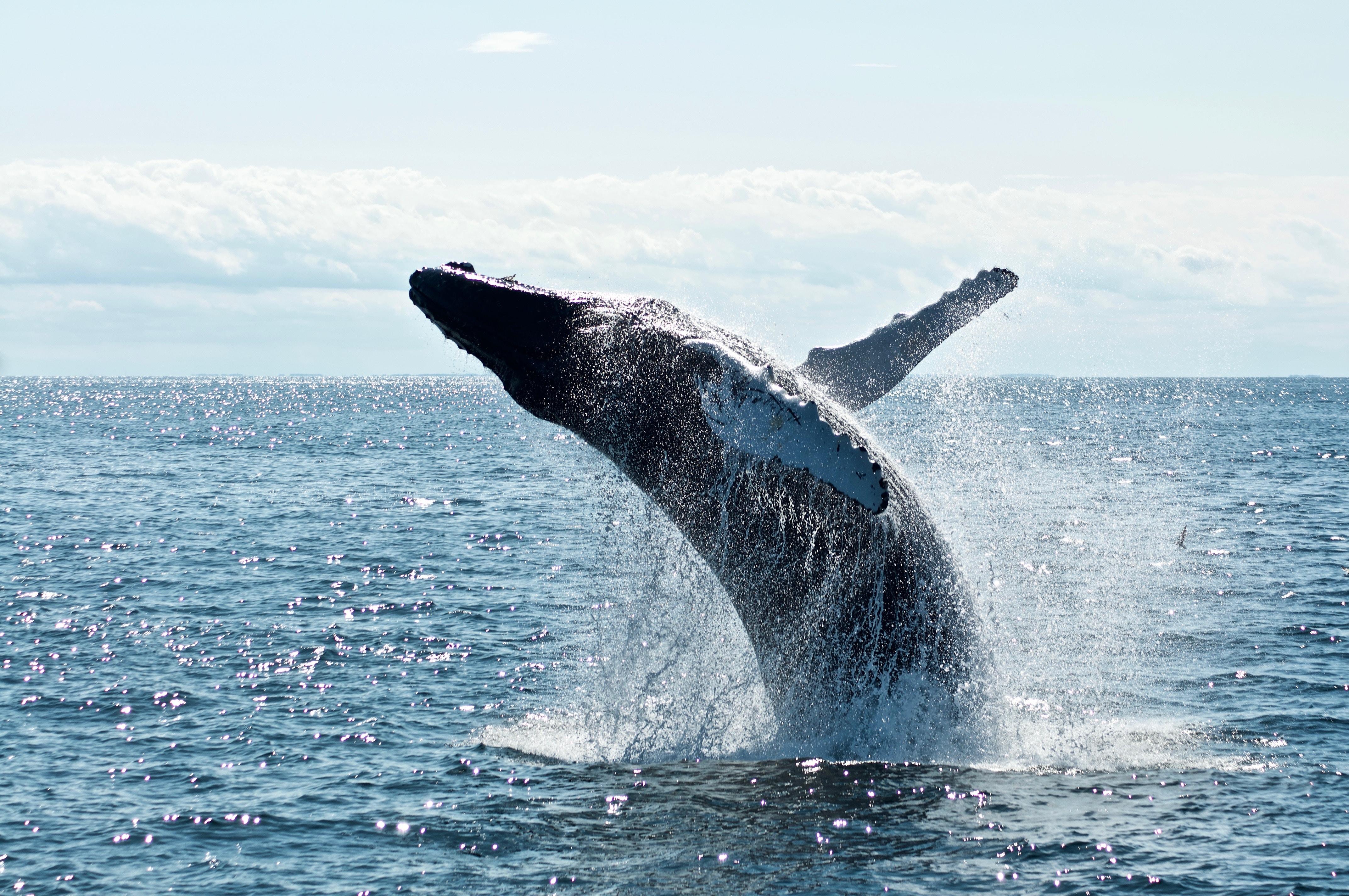
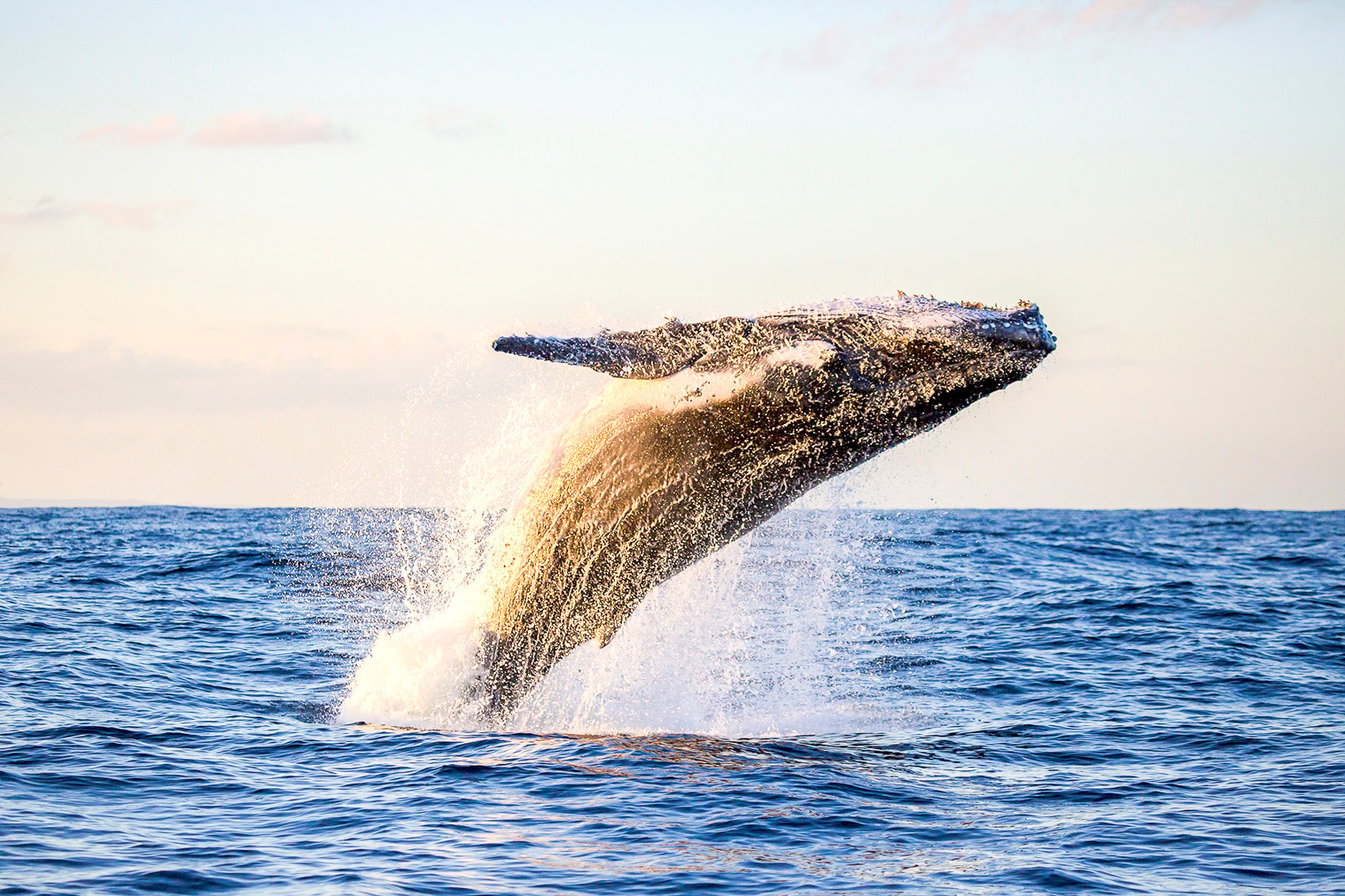
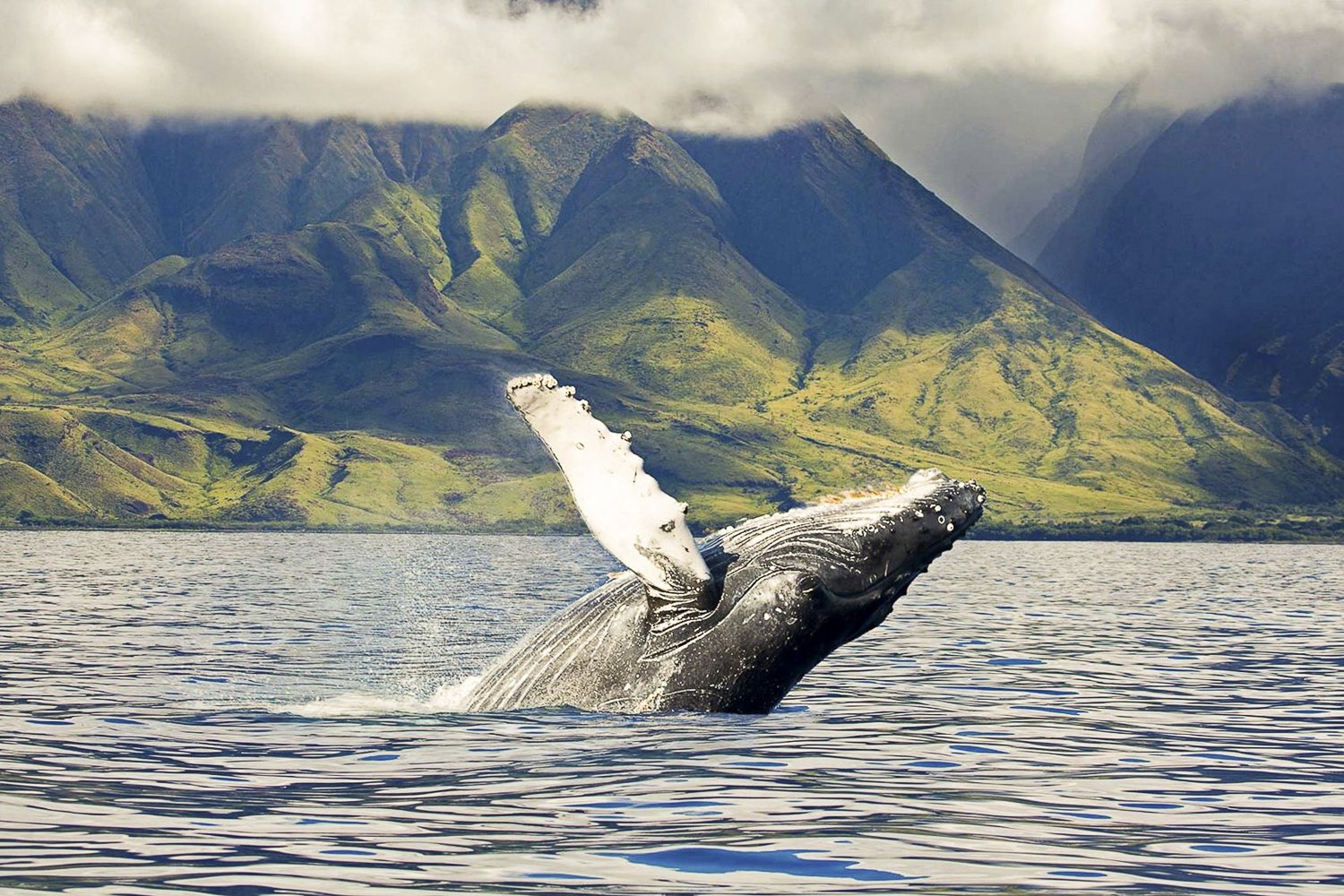
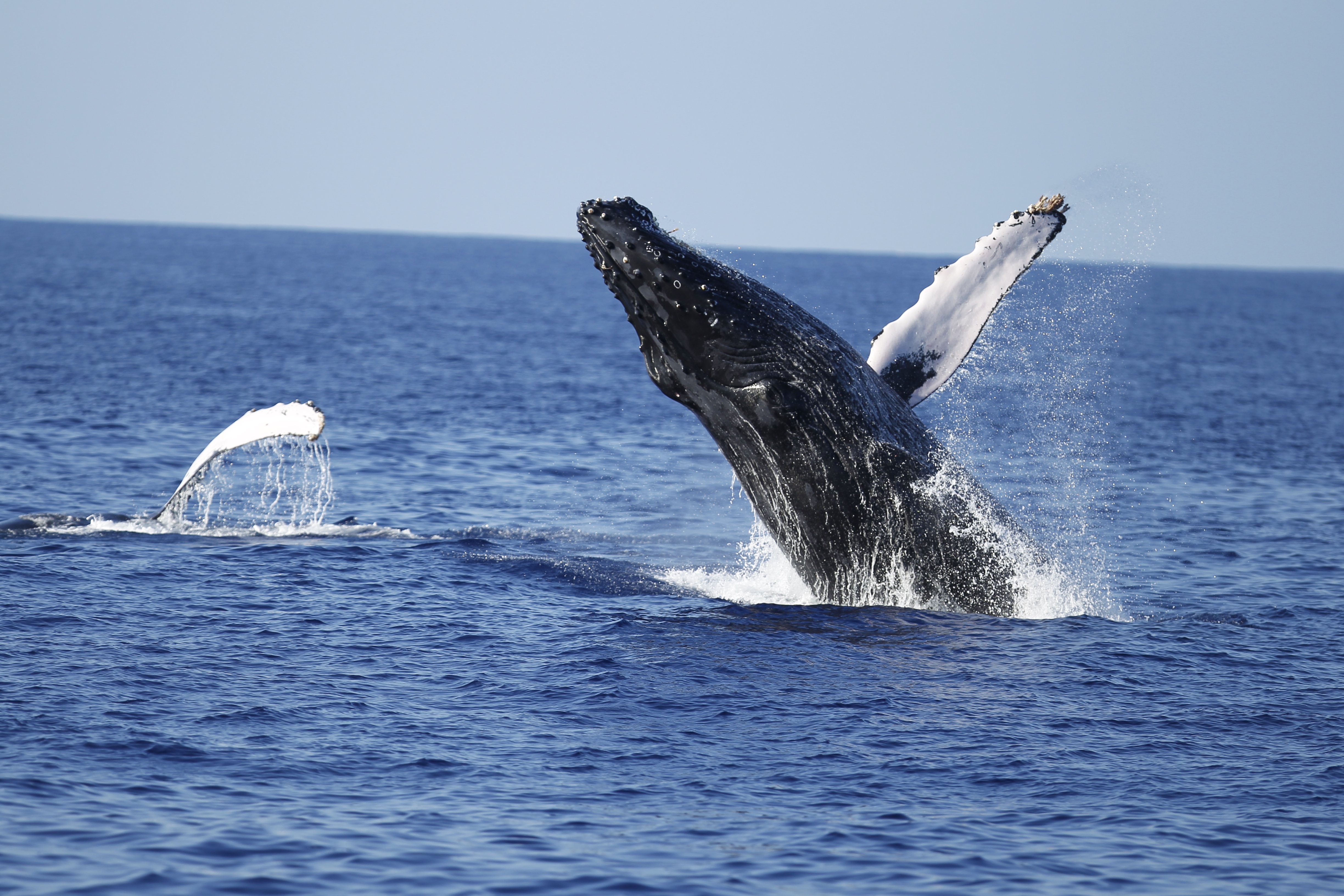
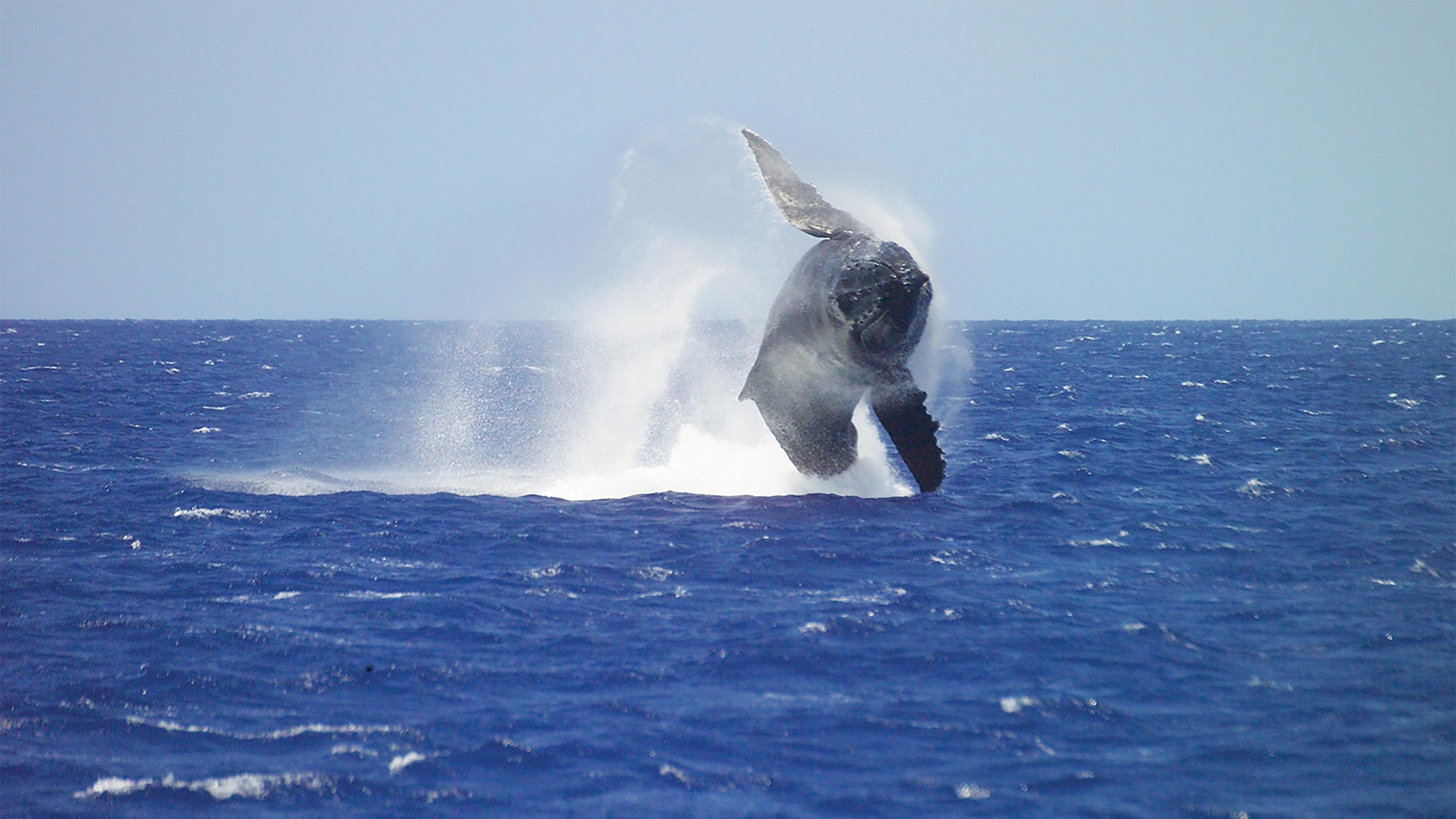
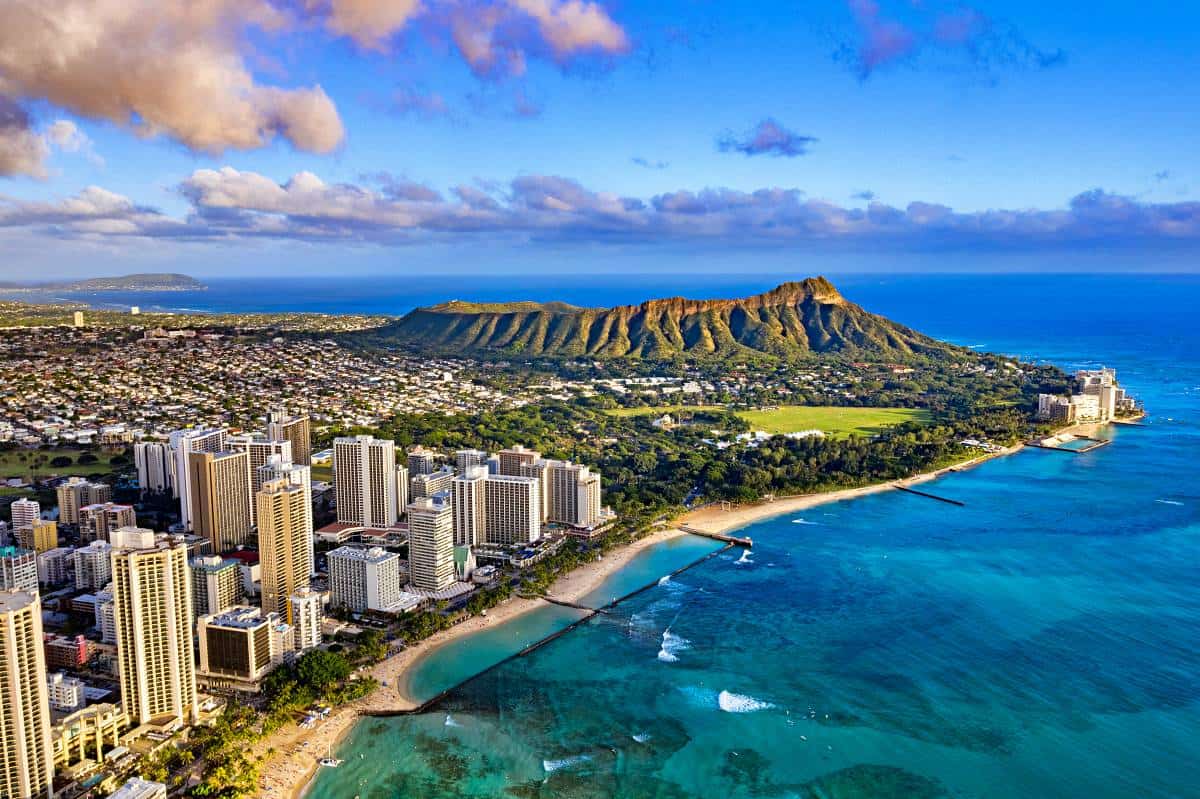
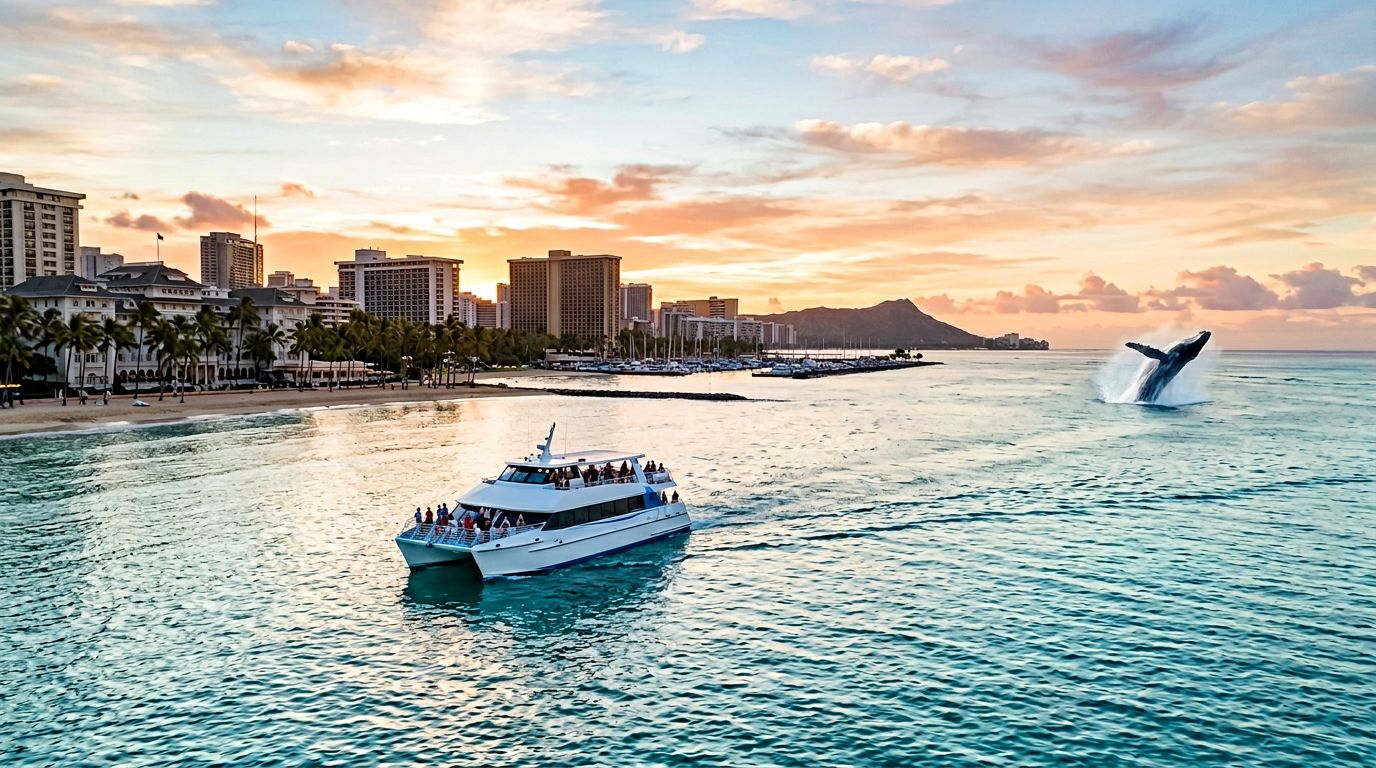
Honolulu whale watching cruise departures concentrate along Oahu's southern coast, where the continental shelf drops steeply just offshore, creating ideal conditions for whale activity within two miles of Waikiki Beach. Morning departures between 8:00 and 10:00 AM offer the calmest seas and best lighting for photography, with surface temperatures averaging 75°F during peak season. Naturalists aboard these vessels identify individual whales by tail fluke patterns, contributing data to the Happywhale photo-identification database that tracks migration routes across the Pacific. Pregnant females and newborn calves remain in protected bays, while competitive pods of males engage in surface-active behavior — breaching, tail slapping, and pectoral fin displays — visible from vessels that maintain the federally mandated 100-yard approach distance.

The sanctuary's research programs have documented singing males at depths between 40 and 120 feet, their vocalizations audible through hydrophones mounted on glass-bottom boats departing from Kewalo Basin. Each song cycle lasts 10 to 20 minutes, evolving throughout the season as males refine melodic phrases that carry across miles of open water. Charter operators work with marine mammal observers who record sighting locations, group sizes, and behavior patterns, feeding real-time data to NOAA's Pacific Islands Fisheries Science Center. West Oahu departures access deeper channels where transient orcas occasionally appear, though humpback encounters remain the primary focus during the January-to-March peak calving period.

More than 12,000 humpbacks return to Hawaiian waters each season, a recovery from fewer than 1,400 individuals in the 1960s

Dress code

Wear comfortable, non-slip footwear suitable for wet boat decks. Layers are recommended for an honolulu whale watching cruise tour as ocean breezes can be cool even on sunny days.

Bags & security

Small personal bags are generally permitted, but storage space is limited on vessels. Please check with your specific honolulu whale watching cruise operator regarding their individual bag size restrictions.

Photography

Personal photography is encouraged during your honolulu whale watching cruise. Please ensure all camera equipment is secured with a strap to prevent it from falling overboard.

Families & strollers

Children are welcome on an honolulu whale watching cruise, but must be supervised by an adult at all times. Life jackets are provided for all ages.

Accessibility

Many operators for an honolulu whale watching cruise can accommodate guests with limited mobility, though vessel boarding may require navigating ramps or steps. Contact your chosen provider in advance to confirm vessel accessibility.

Food & drink

Bringing outside food is generally discouraged; check your honolulu whale watching cruise tickets for inclusive snack or beverage policies. Most vessels provide filtered water.

Not allowed

× Glass bottles × Large coolers × Drones × Illegal substances × Weapons × Professional tripods × Spray sunscreen × Hard-sided luggage

What to bring

✓ Polarized sunglasses ✓ Reef-safe sunscreen ✓ Hat ✓ Light jacket ✓ Waterproof phone case ✓ Valid ID

Opening hours

Mon 08:00–17:00
Tue 08:00–17:00
Wed 08:00–17:00
Thu 08:00–17:00
Fri 08:00–17:00
Sat 08:00–17:00
Sun 08:00–17:00

How to get there

At a glance

Opening Hours

08:00–17:00

Address

Kewalo Basin Harbor and Waikiki Beach, Honolulu, HI

ADA Compliance

Vessel access varies by operator

Optimal Arrival

08:00–16:00

Navigation

Available via harbor access points

Getting there

Public transport · 45 min · Low cost

Use TheBus routes stopping near Ala Moana Blvd for Kewalo Basin access

Car · Variable · Parking rates apply

Parking is available at Kewalo Basin Harbor for a fee

Cancellation policy

Cancellations made at least 24 hours in advance receive a full refund. As there is a 0 USD entrance fee for the harbor area, refunds apply only to the specific operator fees paid for your honolulu whale watching cruise.

Plan your time

Honolulu Whale Watching Cruise Duration and Daily Timing

Recommended time

2-3 hours

A typical honolulu whale watching cruise experience lasts between 90 minutes and two hours, depending on whether you choose a high-speed vessel or a leisurely catamaran. You should plan for additional time at Kewalo Basin Harbor or Waikiki Beach to account for check-in procedures and potential transit from nearby Oahu landmarks. Booking honolulu whale watching cruise tours for the morning is widely recommended to take advantage of calmer marine conditions before afternoon trade winds increase surface chop. Securing your honolulu whale watching cruise tickets in advance ensures you can prioritize these quieter windows to maximize sightings of marine mammals in their natural habitat.

Crowd levels through the day

08:00–10:00 Light
10:00–12:00 Moderate
12:00–14:00 Heavy
14:00–16:00 Moderate
Plan ahead

Best time to visit Honolulu Whale Watching Cruise

Weather · crowds · average price — dots go green to amber to red as each metric rises.

Winter

December through March brings peak humpback activity to Oahu waters. This is the prime season for a dedicated honolulu whale watching cruise.

Spring

April sees the tail end of migration with warmer waters and calmer seas. Sightings are less frequent but the ocean environment remains tranquil.

Insider tips

Helpful tips for visiting Honolulu Whale Watching Cruise

Check-in Early

Arrive at least 30 minutes before your departure to secure a good viewing spot on the deck.

Motion Sickness

If you are prone to seasickness, take preventative measures before boarding your honolulu whale watching cruise.

Respect Wildlife

Maintain the required distance from marine mammals as directed by the crew during the tour.

Check Conditions

Morning trips often provide the calmest seas for optimal viewing.

Where to meet

Honolulu Whale Watching Cruise meeting points

Kewalo Basin Harbor

Kewalo Basin Harbor

1125 Ala Moana Blvd, Honolulu, HI

Primary hub for many operators

Get directions
Waikiki Beach

Waikiki Beach

Waikiki, Honolulu, HI

Secondary pickup location for select tours

Get directions
The story

The history of Honolulu Whale Watching Cruise

Commercial whale watching arrived in Hawaiian waters during the mid-1970s, when a handful of Maui-based operators began offering wintertime excursions to observe North Pacific humpback whales migrating from Alaska. By 1979, Oahu's first dedicated honolulu whale watching cruise launched from Kewalo Basin Harbor, capitalizing on the protected channel between Oahu and neighboring islands. Early operators relied on converted fishing vessels and offered no naturalist commentary. The industry remained small and unregulated until 1982, when federal researchers documented船只 approaching calving mothers within dangerous proximity, prompting the National Marine Fisheries Service to draft approach guidelines. The Hawaiian Islands Humpback Whale National Marine Sanctuary was designated in 1992, establishing a 100-yard minimum distance rule and transforming honolulu whale watching cruise tours into educational platforms. Operators began partnering with marine biologists, installing hydrophones to broadcast whale songs, and training captains in non-invasive observation protocols. The sanctuary's Oahu office opened at Kewalo Basin in 1997, embedding researchers within the harbor community. A 2006 collision between a speeding tour catamaran and a juvenile humpback near Diamond Head led to stricter speed limits and mandatory spotter training, reshaping operational standards across the fleet. Today's honolulu whale watching cruise tickets grant access to a highly regulated seasonal industry, with over thirty permitted vessels operating between December and April. Modern catamarans feature hydrophone systems, onboard naturalists certified by NOAA, and real-time reporting to the sanctuary's sighting network. The humpback population has rebounded from fewer than 1,500 individuals in the 1960s to an estimated 11,000 as of 2023, making Oahu's offshore waters one of the most reliable observation zones in the North Pacific. Kewalo Basin remains the primary departure point, though Waikiki Beach now hosts smaller raft operations targeting the shallow calving grounds south of Honolulu.

Mid-1970s

Commercial whale watching begins in Hawaiian waters, initially concentrated around Maui's sheltered bays.

1979

Oahu's first dedicated whale-watching operation launches from Kewalo Basin Harbor using converted fishing boats.

1982

Federal researchers document unsafe vessel approaches, prompting the National Marine Fisheries Service to draft proximity guidelines.

1992

Hawaiian Islands Humpback Whale National Marine Sanctuary is designated, establishing 100-yard minimum distance regulations.

1997

Sanctuary's Oahu office opens at Kewalo Basin, embedding marine researchers within the harbor operations.

2006

Collision between tour catamaran and juvenile humpback near Diamond Head leads to mandatory spotter training and stricter speed limits.

2023

North Pacific humpback population reaches approximately 11,000 individuals, validating decades of protective management.

Photo spots

Best photo spots at Honolulu Whale Watching Cruise

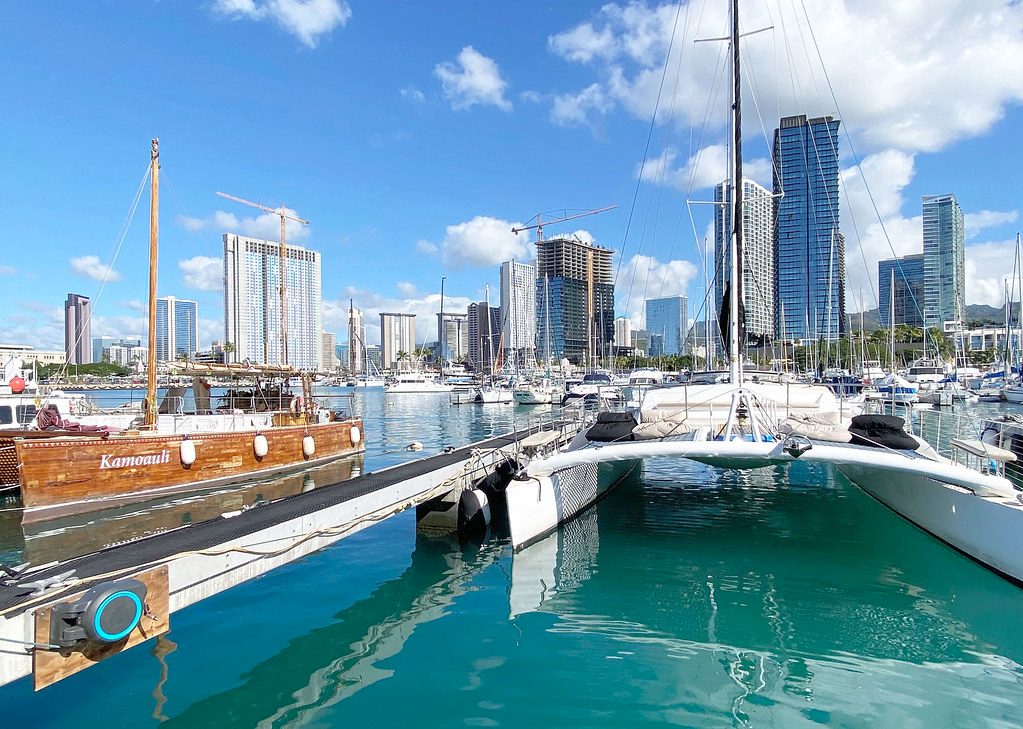
Kewalo Basin Harbor Main Pier

Kewalo Basin Harbor Main Pier

Best light · Before 09:00

Stand near the edge of the docks to capture the morning silhouette of vessels against the harbor waters before your honolulu whale watching cruise departure. This location provides a clear view of the marina infrastructure and calm reflection shots.

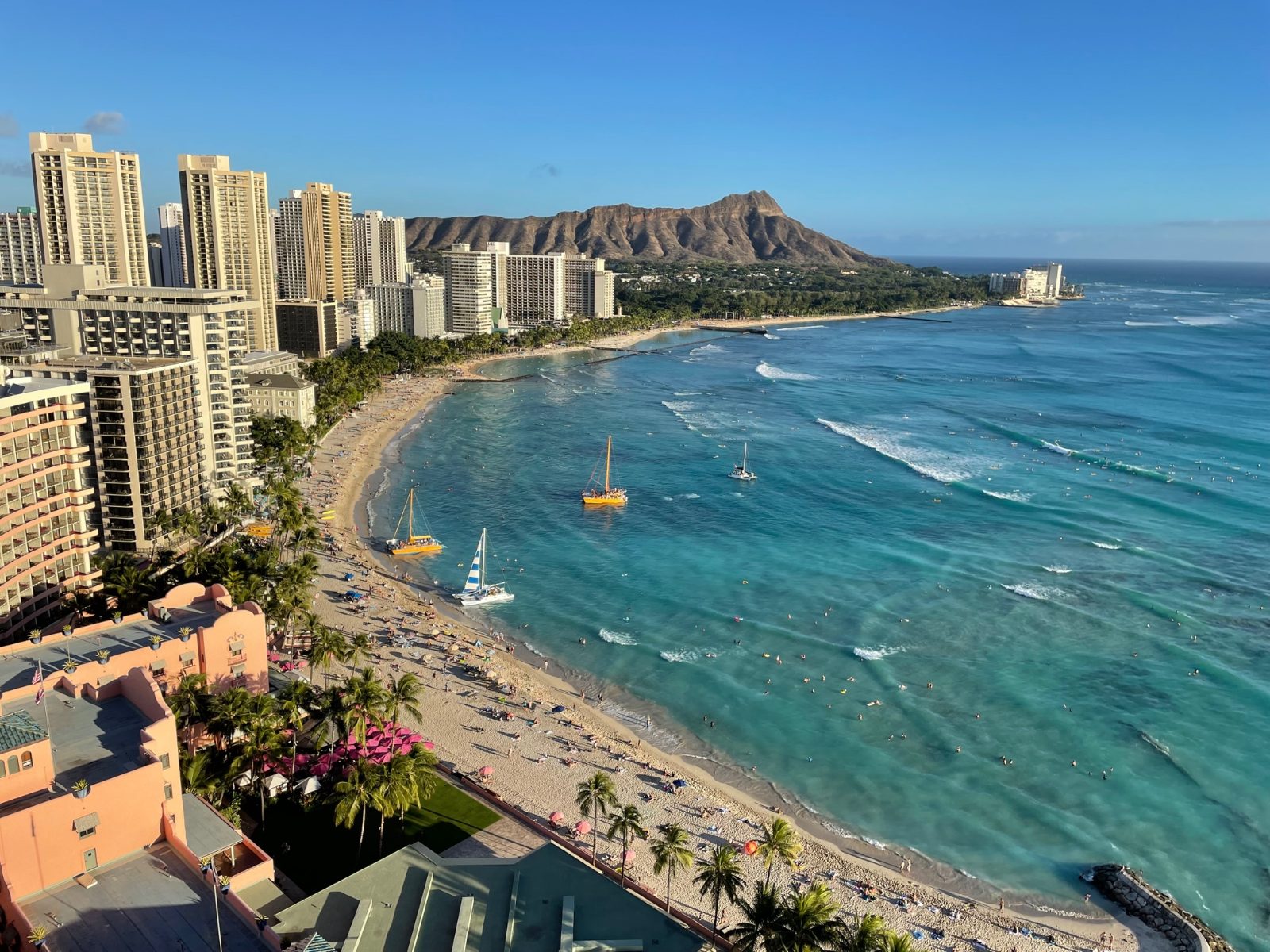
Waikiki Beach Shoreline

Waikiki Beach Shoreline

Best light · Golden hour

Position your camera facing toward the horizon to catch the contrast between the sandy coast and the deep blue Pacific. This perspective is ideal for capturing the vessel as it heads out on a honolulu whale watching cruise tour.

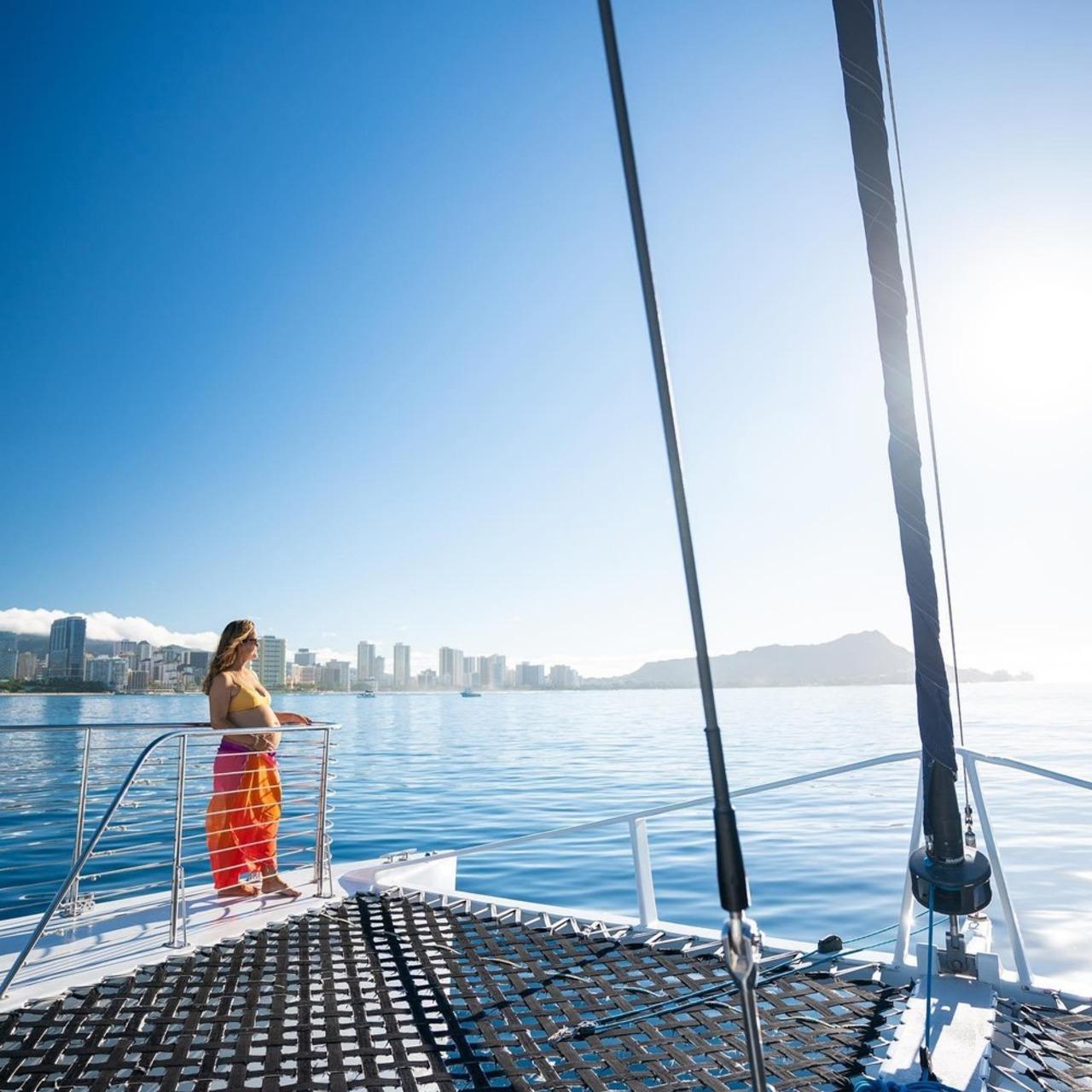
Boat Bow Deck

Boat Bow Deck

Best light · Mid-day

Move to the forward section of the vessel to frame the open ocean, which often serves as the backdrop for whale tail sightings. This spot offers the most unobstructed vantage point for action photography while using honolulu whale watching cruise tickets.

Observation Deck

Observation Deck

Best light · Mid-day

This elevated area provides a panoramic perspective of the coastline and surrounding marine environment. It is the preferred location for capturing wide-angle shots of the horizon while waiting for humpback whale breaches during these honolulu whale watching cruise tours.

Gallery

Moments from Honolulu Whale Watching Cruise

With kids

Family Logistics for a Honolulu Whale Watching Cruise

Preparing for a honolulu whale watching cruise requires planning for small spaces and varying sea conditions to ensure your children remain comfortable. These open-ocean excursions offer a unique chance to observe marine life in their natural habitat while navigating the practical needs of young travelers.

Vessel Safety

Smaller boats may have limited deck movement, so keep children seated during transit and hold onto railings when moving. Always designate a spot for gear since storage is confined on most honolulu whale watching cruise tours. ;Restrooms

Food & drink

Dining Near the Honolulu Whale Watching Cruise Departure Points

Visitors planning a honolulu whale watching cruise often find diverse dining options at the adjacent Kewalo Basin Harbor and nearby Waikiki Beach. Whether you seek a quick bite before your honolulu whale watching cruise tour or a full meal after your sea expedition, the surrounding area provides ample choices.

Fisherman's Wharf

$20-40

Bistro — 2 min walk

Located directly at the harbor, this spot specializes in fresh seafood and harbor views. It is a convenient choice for those holding honolulu whale watching cruise tickets who want to dine near the docks.

FAQ

Honolulu Whale Watching Cruise — frequently asked questions

Everything you need to know for your journey

Around the corner

More to see near Honolulu Whale Watching Cruise

Ala Moana Regional Park

Ala Moana Regional Park

5 min walk

park

A sprawling green space perfect for picnics after your honolulu whale watching cruise

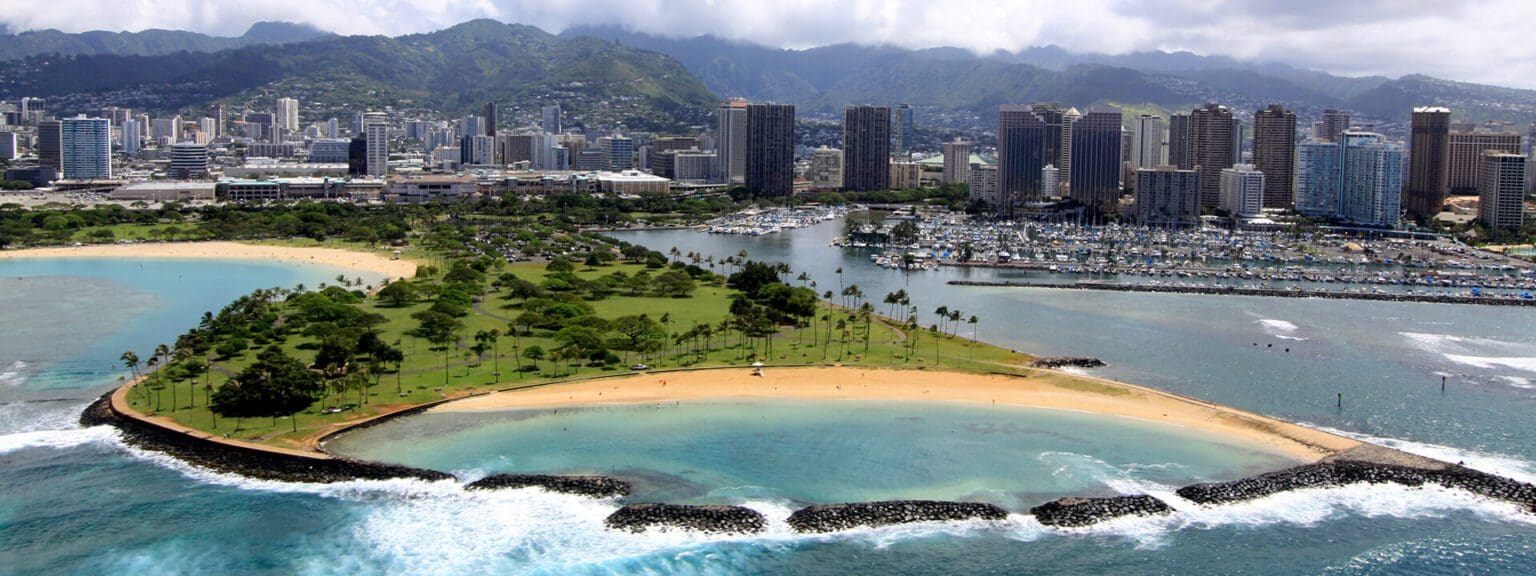
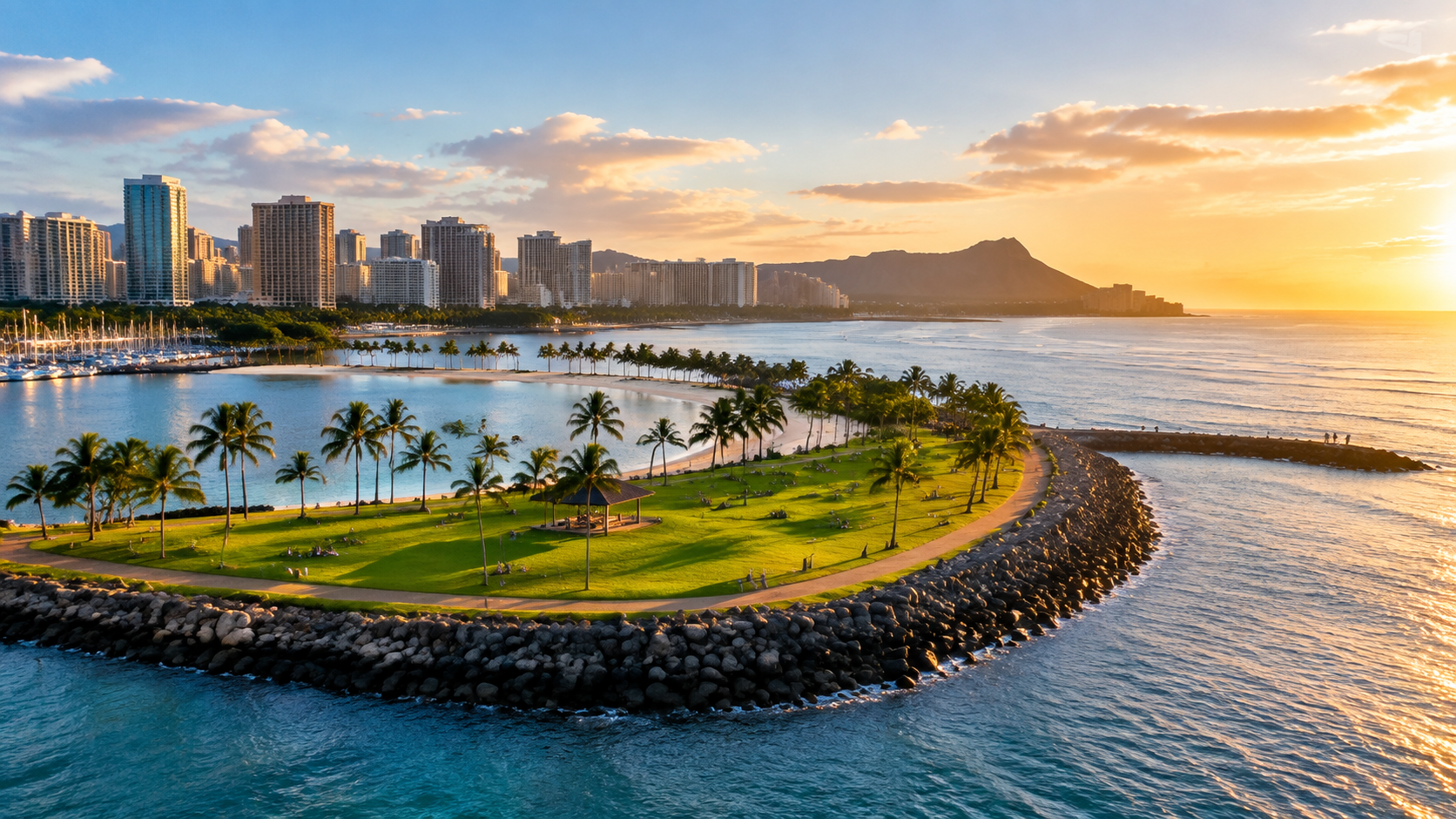
Magic Island

Magic Island

10 min walk

viewpoint

A man-made peninsula offering scenic views of the Honolulu coastline

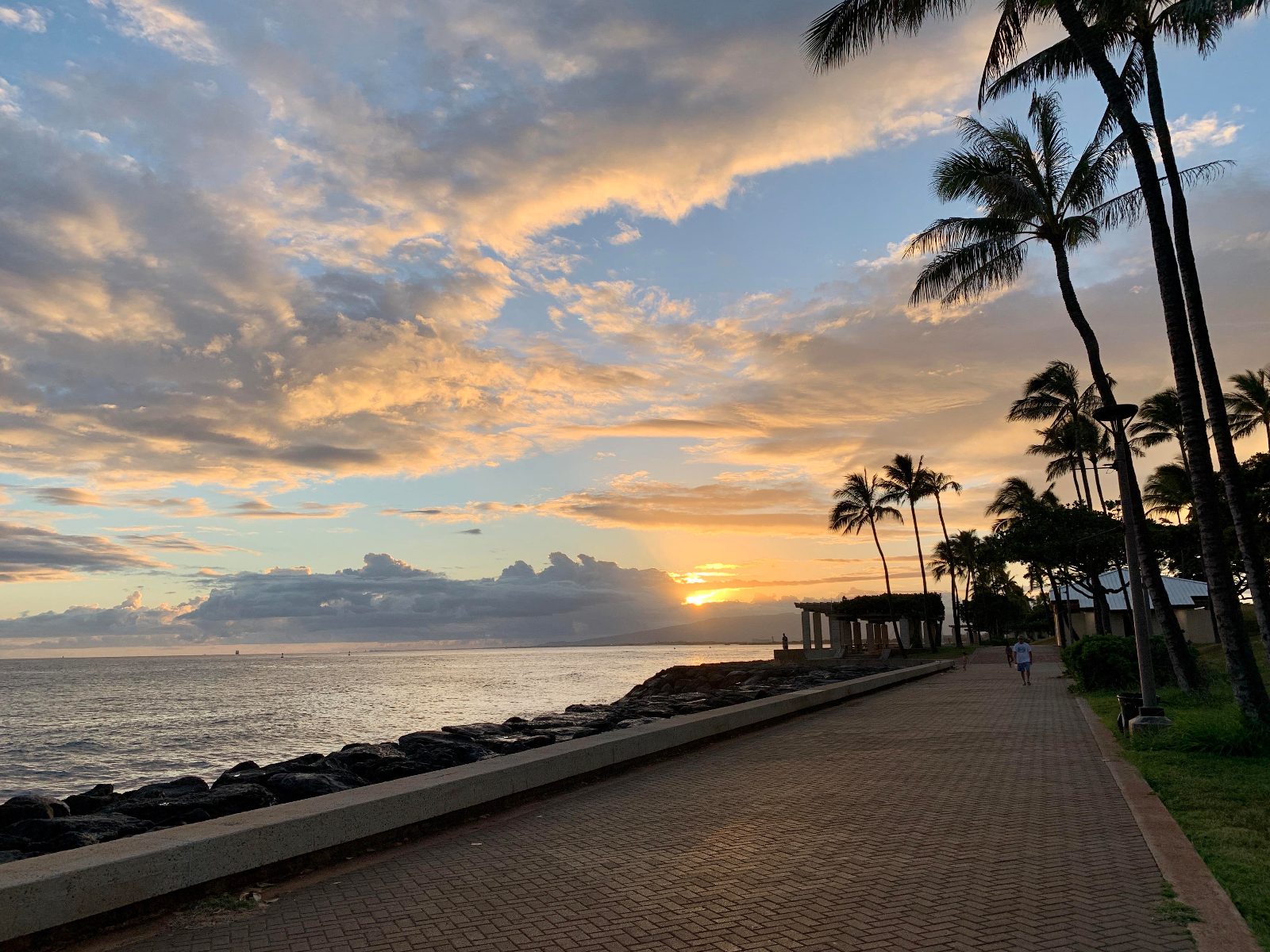
Kaka'ako Waterfront Park

Kaka'ako Waterfront Park

10 min walk

park

Features paved paths and ocean vistas near the harbor

Where to stay

Where to stay near Honolulu Whale Watching Cruise

Ala Moana Hotel

Ala Moana Hotel

10 min walk

mid-range

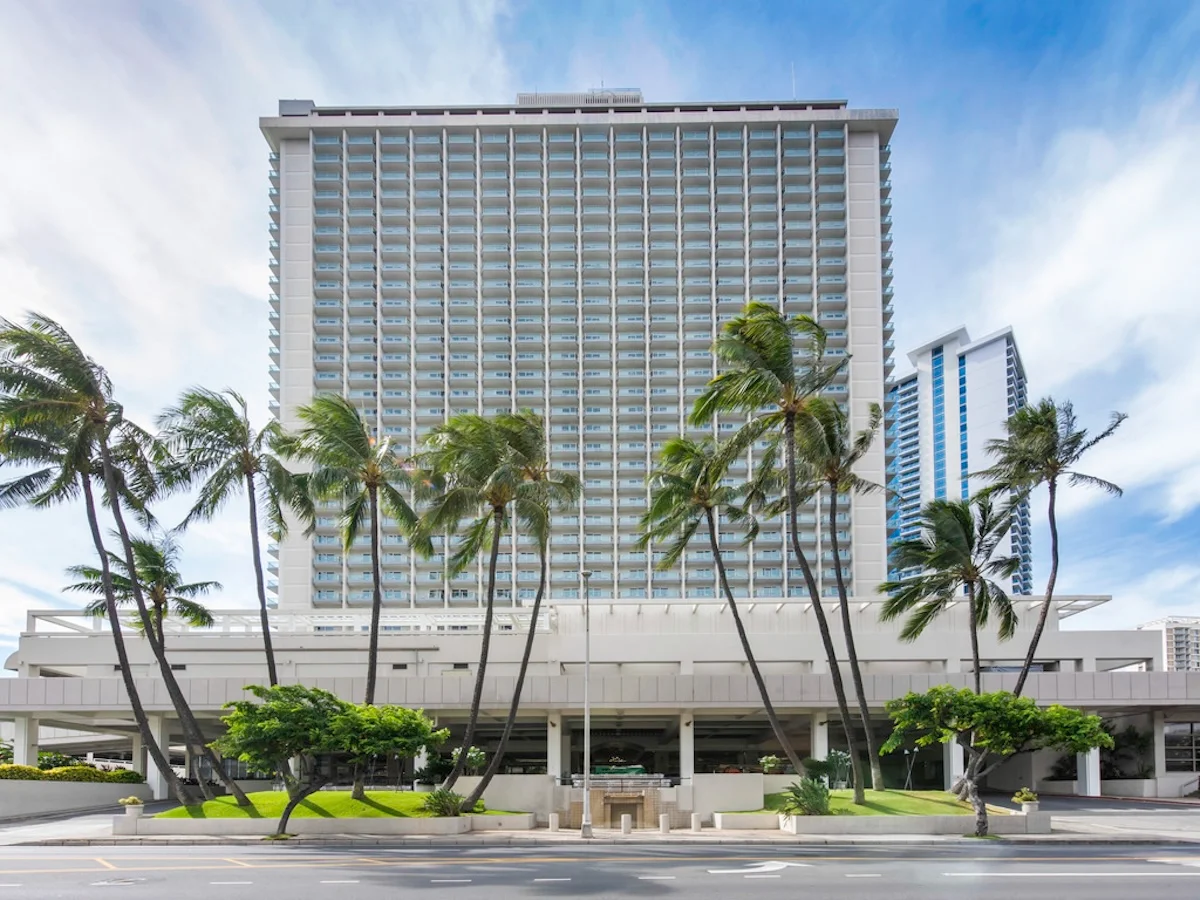
Convenient access to the harbor and shopping

Prince Waikiki

Prince Waikiki

15 min walk

luxury

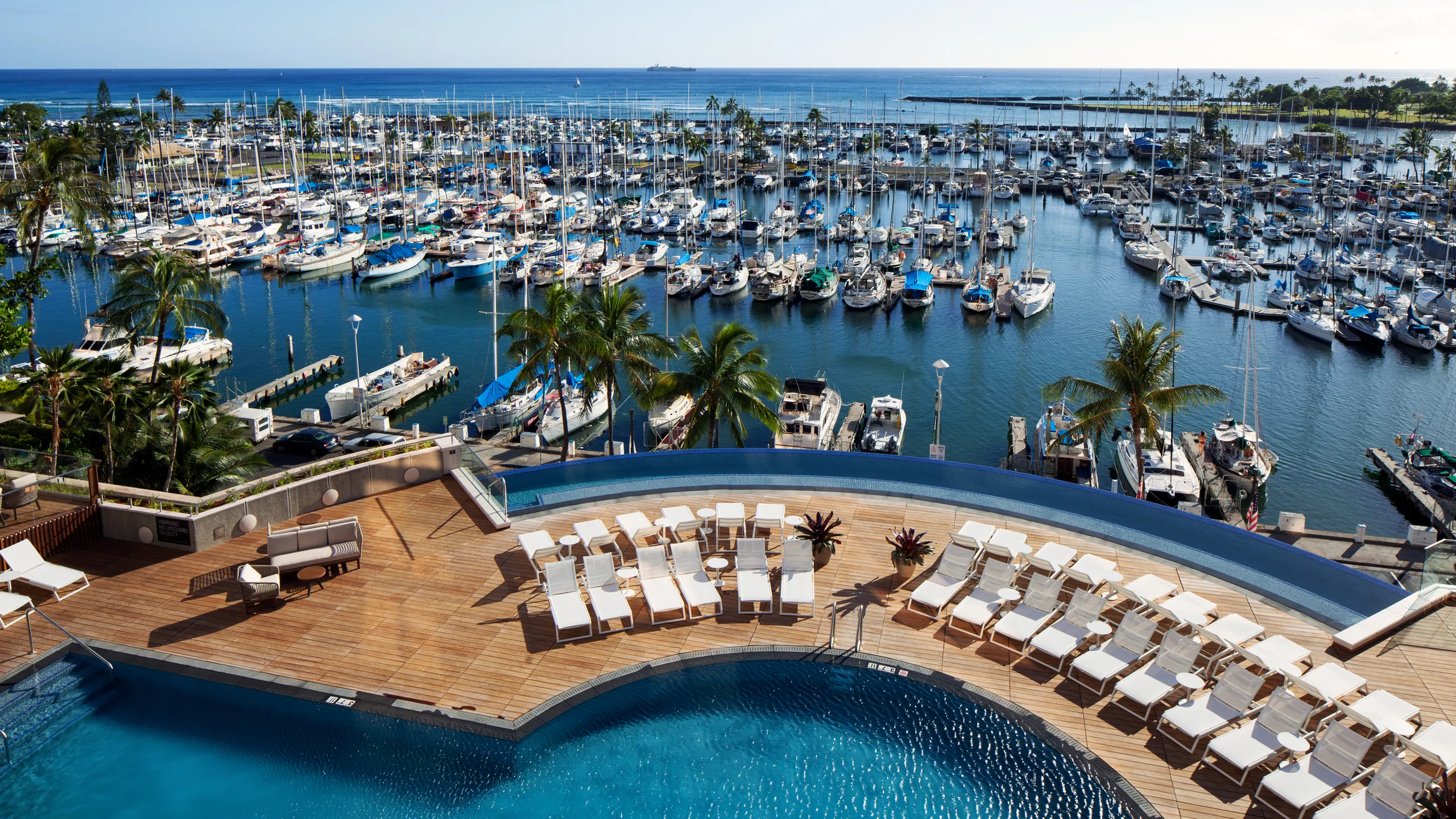
Upscale rooms with harbor views

Waikiki District

Waikiki District

10 min drive

district

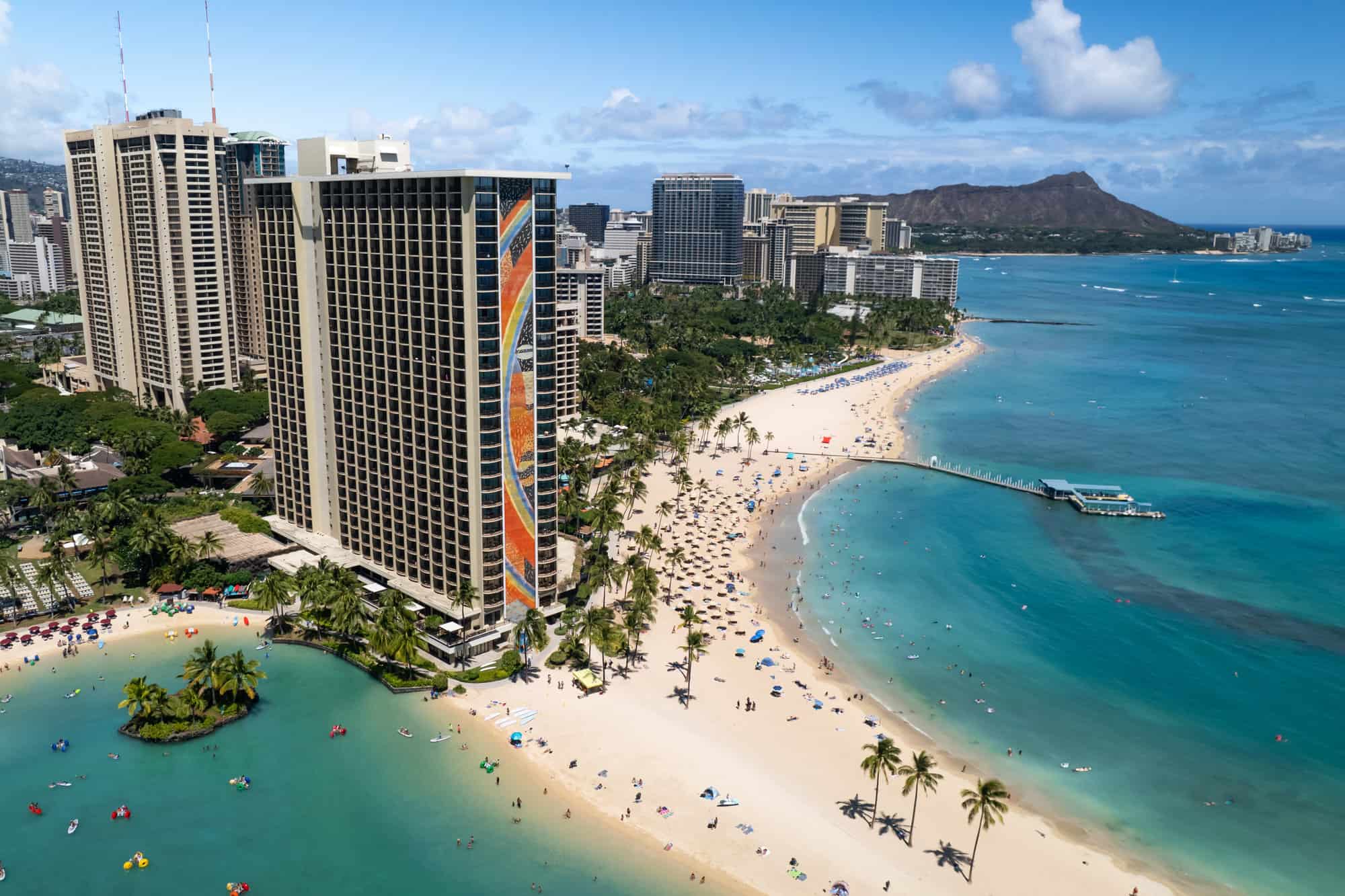
Wide variety of resorts and budget stays

Ready for Adventure?

Join thousands of happy travelers who have discovered this incredible experience

Book Your Experience Now