

Quick answer
Whale watching Honolulu best time spans December through May, when North Pacific humpback whales migrate to Hawaiian waters for breeding and calving. January through March delivers the highest concentration of whales and the most active surface behavior, with February typically offering peak sighting opportunities. Morning departures between 7:00 and 12:00 provide calmer seas and better visibility, though whales remain active throughout daylight hours during the season.
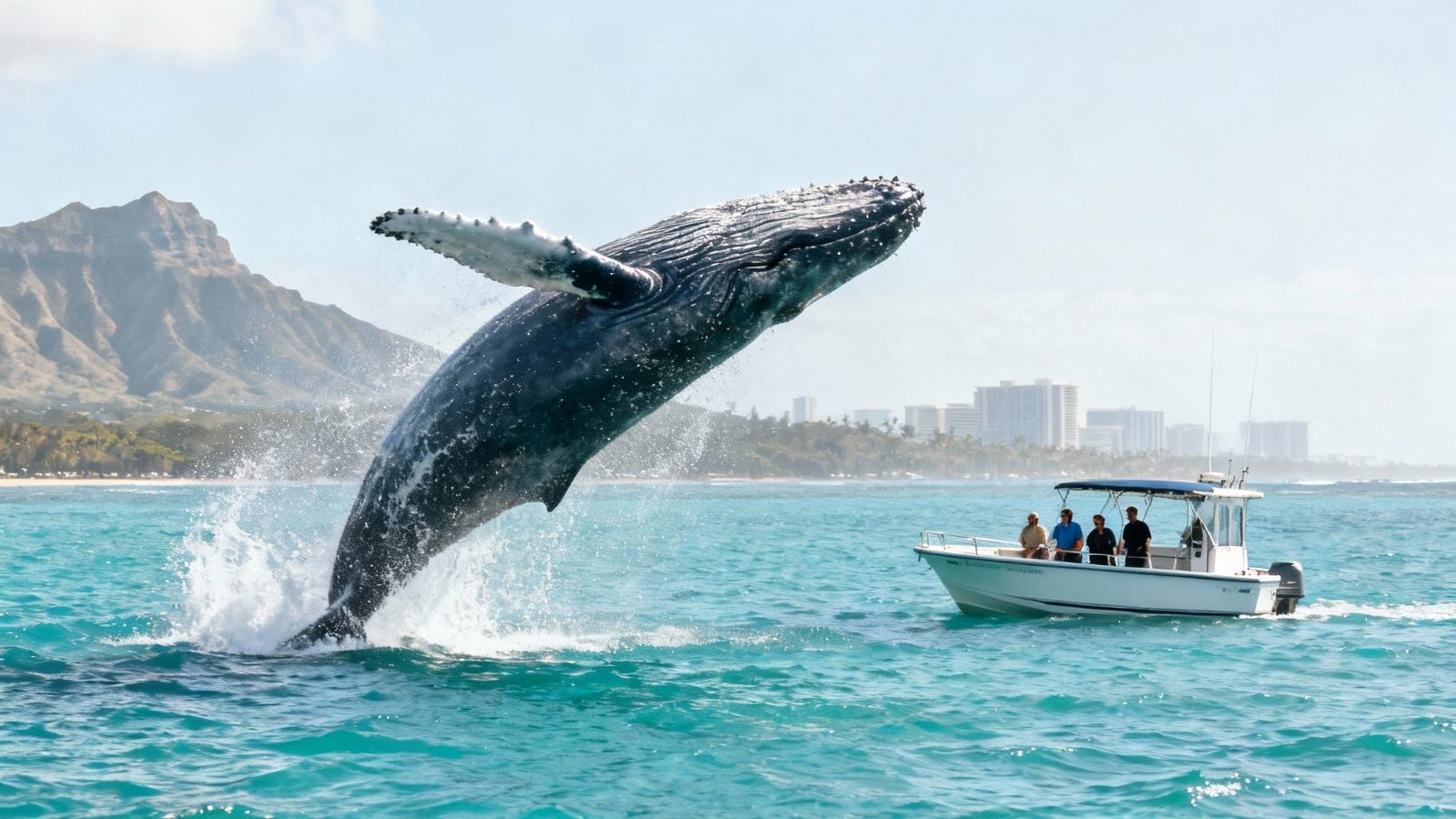
Approximately 10,000 North Pacific humpback whales travel over 3,000 miles from Alaskan feeding grounds to the warm, shallow waters surrounding Oahu each winter. This annual migration creates a four-month window when whale encounters shift from rare to routine along Honolulu's southern and eastern coasts. December arrivals mark the start of the season as early migrants begin appearing in channels between the Hawaiian Islands. Sightings increase steadily through January as the population builds, with mothers and calves becoming more visible in protected bays. February and early March represent the statistical peak, when whale density reaches its highest levels and competitive pod behavior—males vying for female attention—produces the most dramatic surface activity. Breaches, tail slaps, and pectoral fin displays occur most frequently during this eight-week stretch. April sightings remain strong but taper as whales begin their northward journey, with stragglers occasionally spotted into early May. Ocean conditions directly affect viewing quality regardless of whale abundance. Winter swells generated by North Pacific storms create rougher seas along exposed coastlines, particularly December through February. South-facing shores near Honolulu generally experience calmer conditions than windward beaches, making them more reliable for whale watching Honolulu throughout the season. Trade winds ease by late February and March, often delivering the smoothest water of the entire migration period—an advantage that can offset slightly lower whale numbers compared to the January-February peak. Shore-based observation from public lookouts costs nothing and requires no advance planning, though distance limits detail. Diamond Head, Makapuʻu Point, and Lanai Lookout provide elevated vantage points where patient observers routinely spot spouts and breaches during peak months. Boat-based excursions reduce that distance dramatically, bringing viewers within legal approach limits where the scale and power of a 40-ton animal becomes visceral rather than abstract.
“February and early March represent the statistical peak, when whale density reaches its highest levels and competitive pod behavior produces the most dramatic surface activity.”
Operational Hours for Whale Watching Honolulu Best Time Planning
The operational hours for coordinating activities are consistent throughout the week. These hours allow visitors to plan their schedules effectively while observing standard site access times.
| Monday | 07:00–18:00 | |
|---|---|---|
| Tuesday | 07:00–18:00 | |
| Wednesday | 07:00–18:00 | |
| Thursday | 07:00–18:00 | |
| Friday | 07:00–18:00 | |
| Saturday | 07:00–18:00 | |
| Sunday | 07:00–18:00 |
Costs and Fees for Whale Watching Honolulu Best Time Trips
The costs associated with whale watching in Honolulu depend entirely on whether you choose a commercial vessel excursion or shore-based observation. While boat tours carry individual operator fees, viewing from public areas remains accessible to the public.
Shore-based observation is 0 USD, while total costs for boat excursions vary based on the specific tour provider selected.
Getting to the Coast for Whale Watching Honolulu Best Time
Whale watching viewing points and departure harbors are concentrated along the Honolulu coastline. The most efficient way to access these areas is via the primary arterial roads connecting to the Honolulu Harbor district.
TheBus routes 1, 2, or 20 to Ala Moana Center or Honolulu Harbor
H-1 Freeway to Nimitz Highway/Ala Moana Boulevard
Direct service to Kewalo Basin or Honolulu Harbor piers
Whale Watching Honolulu Best Time Preparation Checklist
Ocean-based whale watching demands preparation for sun, wind, and changing marine conditions.
-
Bring polarized sunglasses — They reduce glare off the water and help spot whale spouts and breaches.
-
Pack binoculars (8x or 10x magnification) — They bring distant whales into clear view without digital zoom artifacts.
-
Wear layered, weather-appropriate clothing — Mornings can be cool on the water; sun and spray intensify midday.
-
Apply reef-safe sunscreen before departure — Hawaii regulations protect marine ecosystems; reapplication on deck prevents burns.
-
Secure motion-sickness remedies if prone — Swells vary daily; ginger tablets or wristbands work for many passengers.
-
Charge your camera and bring extra batteries — Whale activity is unpredictable; you will not want to miss a breach due to dead gear.
Check availability
Frequently Asked Questions About Whale Watching in Honolulu
Everything you need to know about whale watching honolulu best time