

Quick answer
The honolulu whale watching season runs from mid-December through late April, with peak activity occurring in February and March when humpback whale populations reach their highest concentrations. Whales migrate from Alaska to breed and calve in Hawaii's warm waters, with early mornings between 7:00 AM and 10:00 AM offering the calmest sea conditions and clearest visibility. Shore-based viewing is free from public lookouts, while boat tours operate daily during the season with varying pricing.
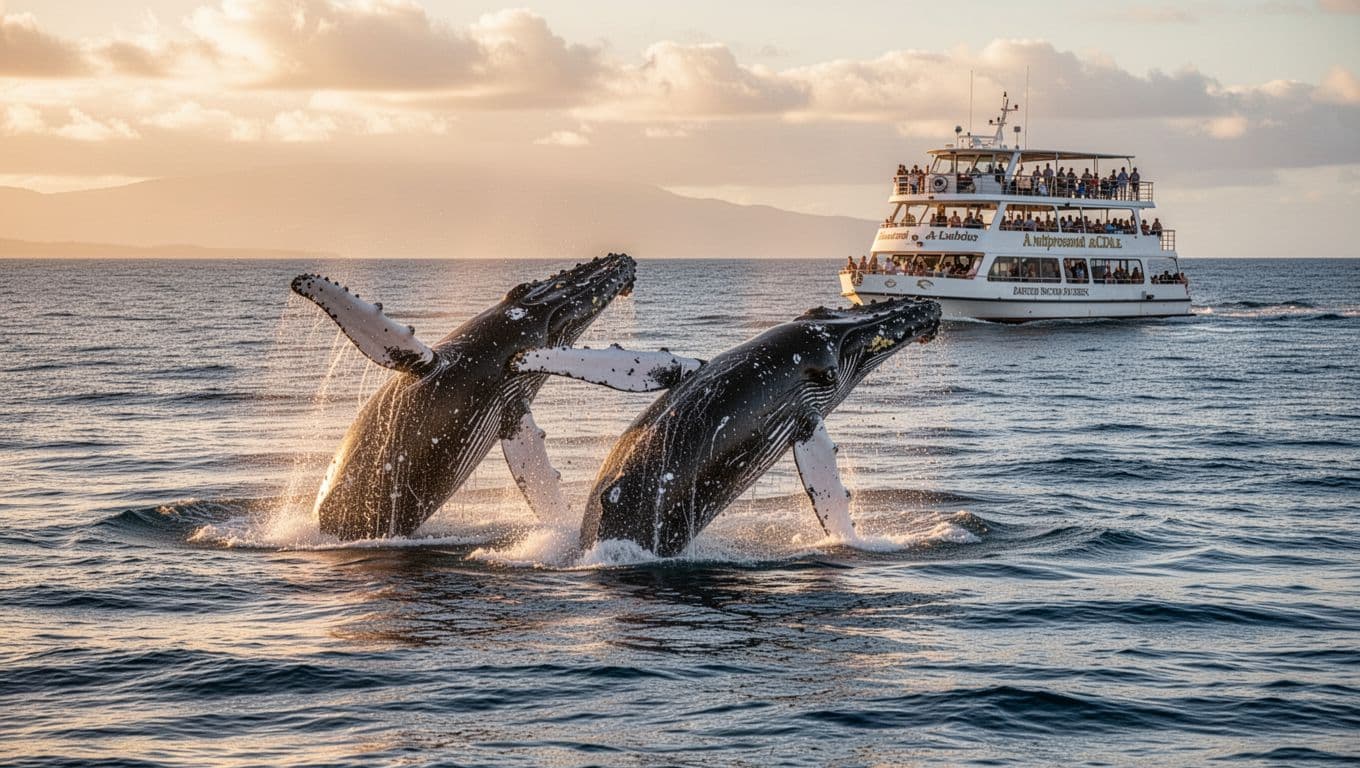
Humpback whales travel over 3,000 miles from Alaskan feeding grounds to reach Hawaiian waters, one of the longest mammal migrations on Earth. Their arrival transforms Oahu into a living observatory where breaches, tail slaps, and blows become daily occurrences along the southern and eastern coasts. The migration follows a predictable calendar shaped by breeding cycles and water temperature, making timing as critical as location for successful encounters. The season opens in mid-December as scout whales arrive, with numbers building steadily through January. February and March mark the peak of humpback whale season Oahu-wide, when cow-calf pairs dominate shallow waters and competitive male groups create surface activity visible from shore. April brings departures as whales begin the return journey north, though stragglers linger into early May. Water clarity and wind patterns shift throughout these months—early season offers glassier conditions, while late season brings increased calf activity as newborns build strength for migration. Morning departures between 7:00 AM and 10:00 AM align with trade wind lulls that flatten the ocean surface, critical for spotting distant blows and tracking submerged whales through their shadows. Shore observers gain advantages at elevated lookouts where angle and distance compensate for boat proximity—Diamond Head, Makapuʻu Point, and the Lanai Lookout provide unobstructed sightlines across migration corridors. Boat-based viewing accesses deeper channels where singing males gather and competitive pods perform aerial displays, though sea state determines daily viability. The humpback population visiting Hawaii numbers approximately 10,000 individuals, with two-thirds concentrated in the four-island area between Maui, Molokaʻi, Lānaʻi, and Kahoʻolawe. Oahu receives a smaller but consistent share, particularly along the southeastern coastline where shallow banks and protected bays serve as nursery habitat. Federal guidelines mandate 100-yard distances for vessels and prohibit pursuing, encircling, or separating mother-calf pairs—regulations enforced by NOAA throughout the season to minimize disturbance during critical life stages.
“February and March deliver the highest whale concentrations when cow-calf pairs and competitive male groups dominate Oahu's southern coastline.”
The Best Months for Honolulu Whale Watching Season
The North Pacific humpback whale season in Hawaii typically spans from December through April, with peak activity occurring between February and March. During these months, early mornings are the ideal time for daily observation as calm sea conditions enhance visibility.
Peak Season (Feb–Mar)
High70°F–78°F; calm morning waters
Most frequent surface activity and whale sightings occur during these months.
Early Season (Dec–Jan)
Moderate68°F–76°F; occasional wind
Whales begin arriving in Hawaiian waters, making sightings less frequent but possible.
Late Season (April)
Low72°F–80°F; warm and stable
Whales prepare for their northern migration, offering final opportunities to observe pods.
Daily Best Arrival Window
Varies—
The best arrival window is 07:00–10:00 as early mornings typically offer the calmest sea conditions for optimal whale visibility.
Verdict: For the highest probability of sightings, plan your visit for February or March and prioritize an arrival window between 07:00 and 10:00.
Operating Hours During Honolulu Whale Watching Season
Operational hours for whale watching tours and shore-based viewing access remain consistent throughout the week in Honolulu. Visitors may access facilities during the following times.
| monday | 07:00–17:00 | |
|---|---|---|
| tuesday | 07:00–17:00 | |
| wednesday | 07:00–17:00 | |
| thursday | 07:00–17:00 | |
| friday | 07:00–17:00 | |
| saturday | 07:00–17:00 | |
| sunday | 07:00–17:00 |
Costs for Honolulu Whale Watching Season Activities
The costs associated with whale watching in Honolulu depend entirely on whether you choose shore-based observation or a commercial boat excursion. While viewing from public land incurs no charge, boat tours set their own independent rates.
Observation from the shore is 0 USD, while total costs for boat excursions vary based on the specific tour operator and package selected.
Honolulu Whale Watching Season Preparation Checklist
Prepare these essentials to maximize your chances of encountering humpback whales during Oahu's peak season.
-
Book your boat tour in advance — December through April slots fill quickly as visitors arrive for peak whale migration.
-
Pack binoculars or a zoom lens — Whales surface 300+ yards from shore and boats maintain mandatory 100-yard distance.
-
Take motion sickness medication early — Even calm mornings can produce swells; preventatives work best when taken 30–60 minutes before departure.
-
Arrive during the recommended window — Early morning trips between 07:00–10:00 align with calmer seas and active whale surface behavior.
-
Wear layered clothing and sunscreen — Ocean breezes drop temperatures on the water while UV exposure intensifies with reflected sunlight.
-
Bring a waterproof bag — Spray and splashing are common on smaller vessels during whale approaches.
Facts About the Honolulu Whale Watching Season
The waters surrounding Oahu serve as a critical habitat for humpback whales, protected under federal and state regulations. Understanding the biology and behavior of these marine mammals enhances the experience of observing them in their natural environment.
Hawaiian Islands Humpback Whale National Marine Sanctuary
This sanctuary, known as Na Kai Ewalu, encompasses approximately 1,370 square miles of federal and state waters specifically designated to protect humpback whales and their habitat.
3,000 miles of migration
North Pacific humpback whales migrate from their summer feeding grounds in Alaska to the warmer waters of Hawaii to mate, calve, and nurse their young.
40 to 50 feet in length
Adult humpback whales typically grow to between 40 and 50 feet long and can weigh up to 40 tons.
Surface behaviors defined
Common observed behaviors include breaching, where the whale leaps out of the water, and tail slapping, which may be a form of communication or social interaction.
10 to 15 minutes submerged
While humpback whales generally remain submerged for 10 to 15 minutes, they are capable of holding their breath for up to 30 minutes.
Singing exclusively by males
Only male humpback whales sing complex, repetitive songs that can last for hours, a behavior primarily associated with the breeding season.
Check availability
Frequently asked questions about honolulu whale watching season
Everything you need to know about honolulu whale watching season